

The pilot departed on the first of two legs of a cross-country flight with full main fuel tanks (30 gallons each, 28 gallons useable). The first leg of the one-hour-and-45-minute flight was uneventful, and the Piper PA-24’s engine performed normally during the flight.
The airplane was not refueled after the completion of the first leg, so he checked his fuel both visually and with the fuel gauges.
During the cruise portion of the return flight, he noted a partial loss of engine power, with RPM dropping to between 1,000 and 1,200. He initiated the checklist procedures for a partial power loss, declared an emergency with air traffic control, and power was briefly restored.
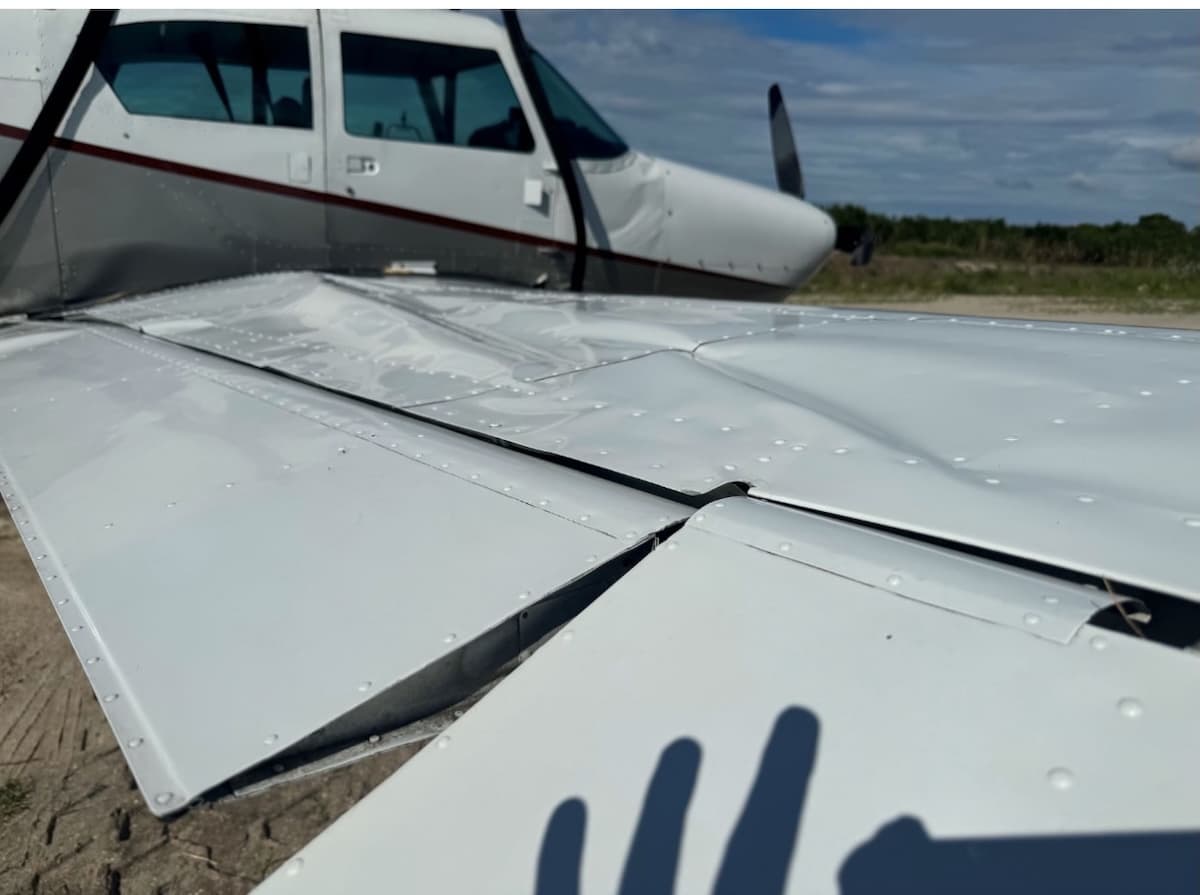
The engine RPM again dropped, and since the closest airport was too far away, he executed a forced landing in a sugar cane field near Moore Haven, Florida, about one hour and 18 minutes into the return flight.
The pilot told investigators that the airplane should have had about two hours of fuel remaining when the engine lost power.
FAA inspectors responded to the accident site and examined the wreckage. They confirmed substantial damage to the airframe.
The fuel system was examined at the scene. The auxiliary wingtip fuel tanks and main fuel tanks contained no quantifiable fuel. The main fuel tanks were not ruptured, and there was no evidence of fuel leakage outside the airplane. The fuel strainer was undamaged and was empty of fuel.
After recovery of the wreckage, the engine was prepared for a test run. The engine started on the first attempt and was eventually run up to 2,000 rpm before the run was concluded. Impact damage to the propeller prevented a run at a higher rpm.
Also, the fuel tanks were filled with water to check for leaks; no leaks were noted.
The pilot reported that the main tanks were “topped” with 8.7 gallons of fuel prior to the first leg of the trip. Prior to this servicing, the tanks were reportedly filled 26 days before the accident, and the pilot stated that his son flew the airplane for three touch-and-go landings after this refueling.
Automatic Dependent Surveillance-Broadcast (ADS-B) data revealed that the airplane was airborne for one hour and two minutes and taxied a total of 18 minutes on this flight. Estimated fuel burn for a flight of this duration was about 15 gallons.
Therefore, it is unlikely that the pilot initiated the cross-country trip with a full fuel load, and it is possible that he perceived his main fuel tanks to be completely full before beginning the first leg when they were not.
The pilot’s operating handbook for the airplane stated that, due to several factors, many fuel cells do not hold their full rated capacity.
Probable Cause: The pilot’s failure to initiate the cross-country flight with an adequate fuel supply, resulting in a loss of engine power and forced landing due to fuel exhaustion.
To download the final report. Click here. This will trigger a PDF download to your device.
This October 2024 accident report is provided by the National Transportation Safety Board. Published as an educational tool, it is intended to help pilots learn from the misfortunes of others.
Leave a Reply