• Skip to primary navigation
  • Skip to main content
  • Skip to primary sidebar
General Aviation NewsGeneral Aviation News

General Aviation News

Because flying is cool

  • Pictures of the Day
    • Submit Picture of the Day
  • Stories
    • News
    • Features
    • Opinion
    • Products
    • NTSB Accidents
    • ASRS Reports
  • Comments
  • Classifieds
    • Place Classified Ad
  • Events
  • Print Archives
  • Subscribe
  • Show Search
Hide Search

The Sound, the Fury, the Aliens: Racing at Roswell

By Geremy Kornreich · October 7, 2026 · Leave a Comment

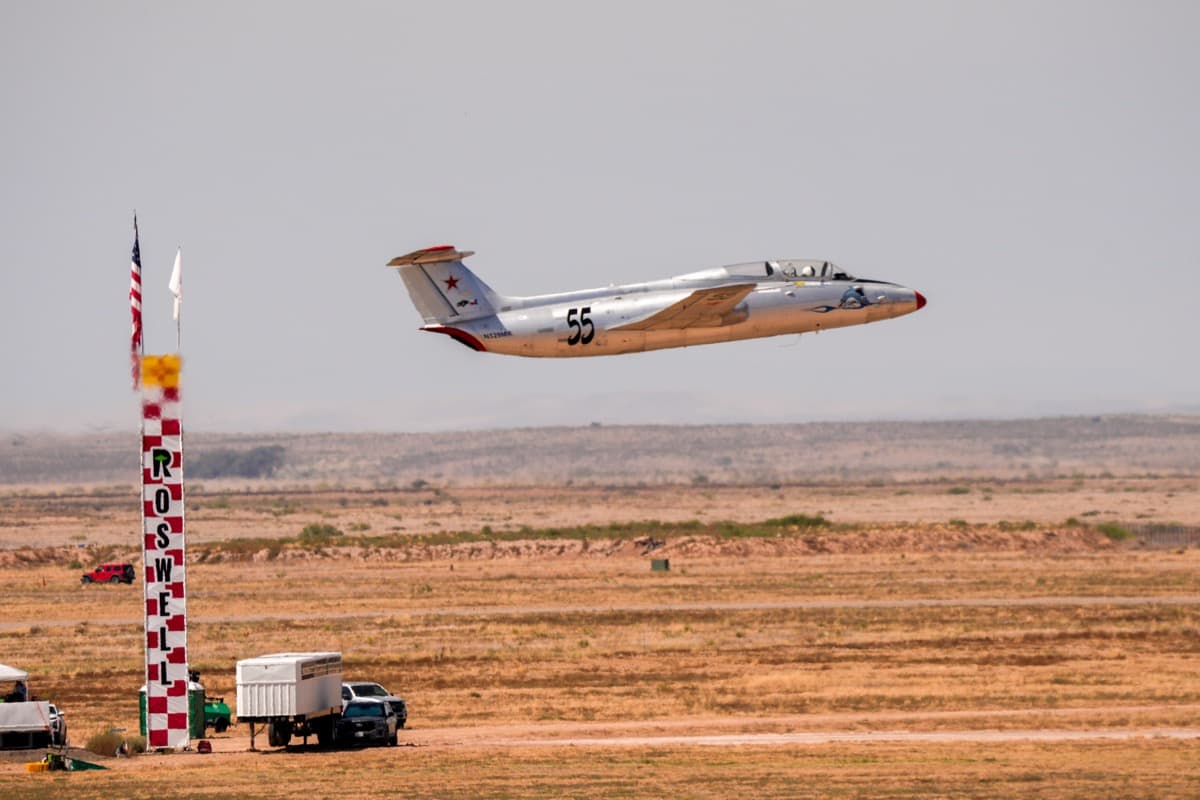
Nathan Harnagel flies his L-29 Delfin “Spirit of Freedom” past the start/finish tower. (All Photos by Geremy Kornreich)

The second running of the National Championship Air Races in Roswell, New Mexico, was bigger in every way over last year’s inaugural races.

After 63 years at Reno-Stead Airport in Nevada, Roswell is now the epicenter of air racing, with more than 67 different airplanes racing in all seven pylon classes, plus 14 pilots in the STOL Drag races. This year’s races, held Sept. 16-20 at Roswell Air Center (KROW), included the Sport and Unlimited classes, which opted to sit out the first year at Roswell.
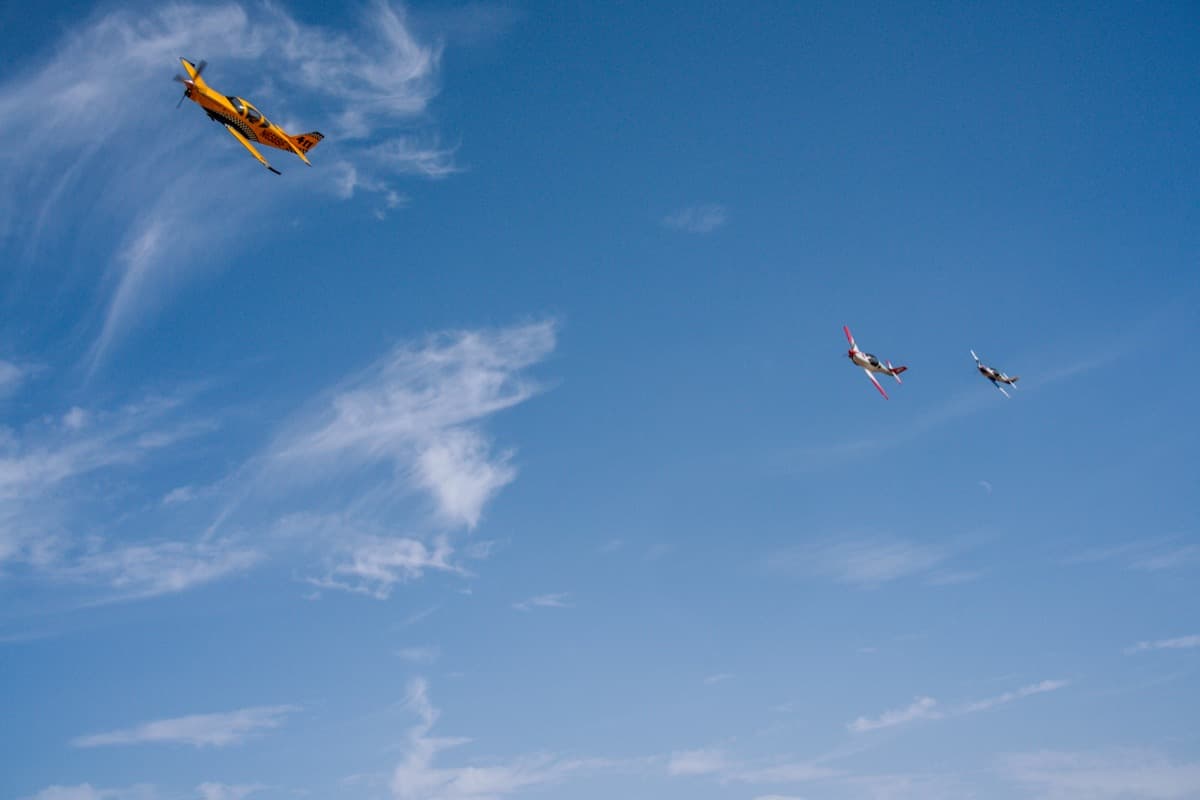
“Blown Budget” leads two other Sport class aircraft down the course.

It was hot, it was fun, it was occasionally loud, and everyone seemed to be having a great time. Racers, crew, and attendees were enthusiastic about the “Roswell aliens” theme of the event.
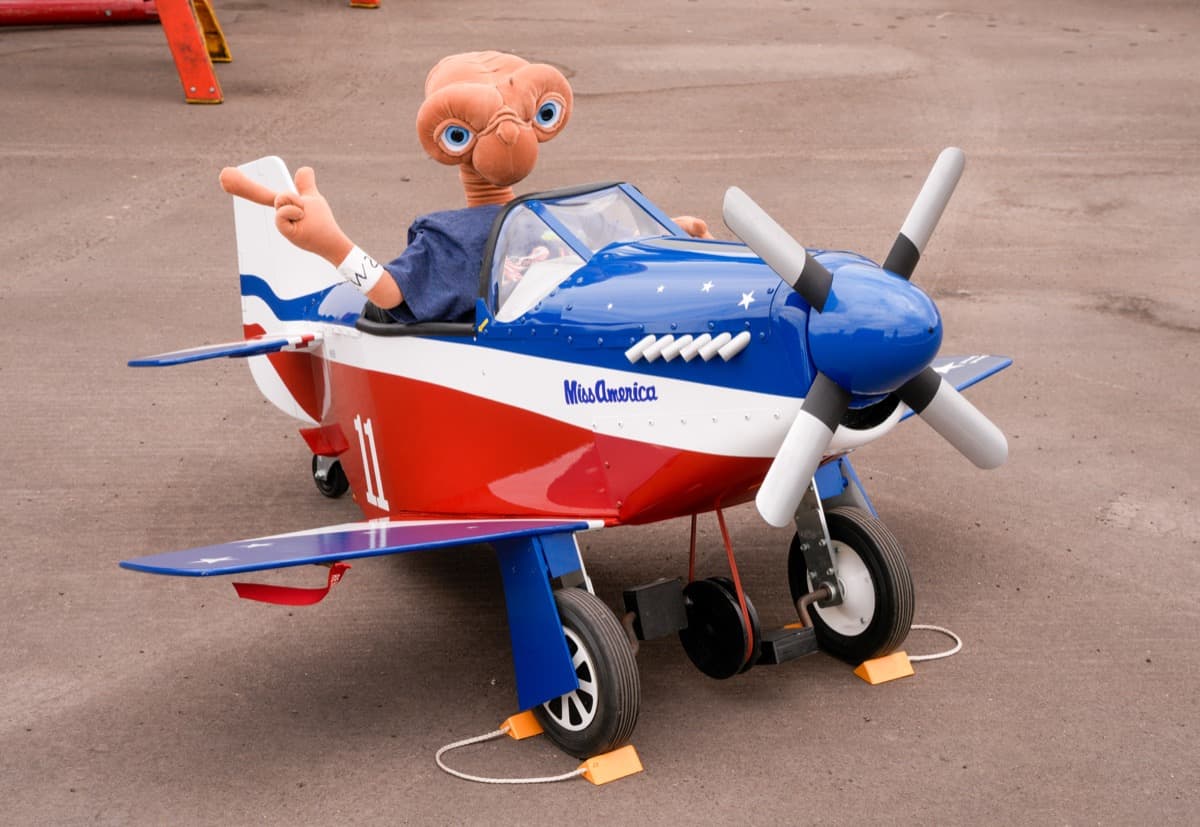
ET has his own version of the Unlimited Class P-51 Mustang “Miss America.” Alas, he did not qualify for the races.

Many longtime fans were there, and the new location brought new fans, too.
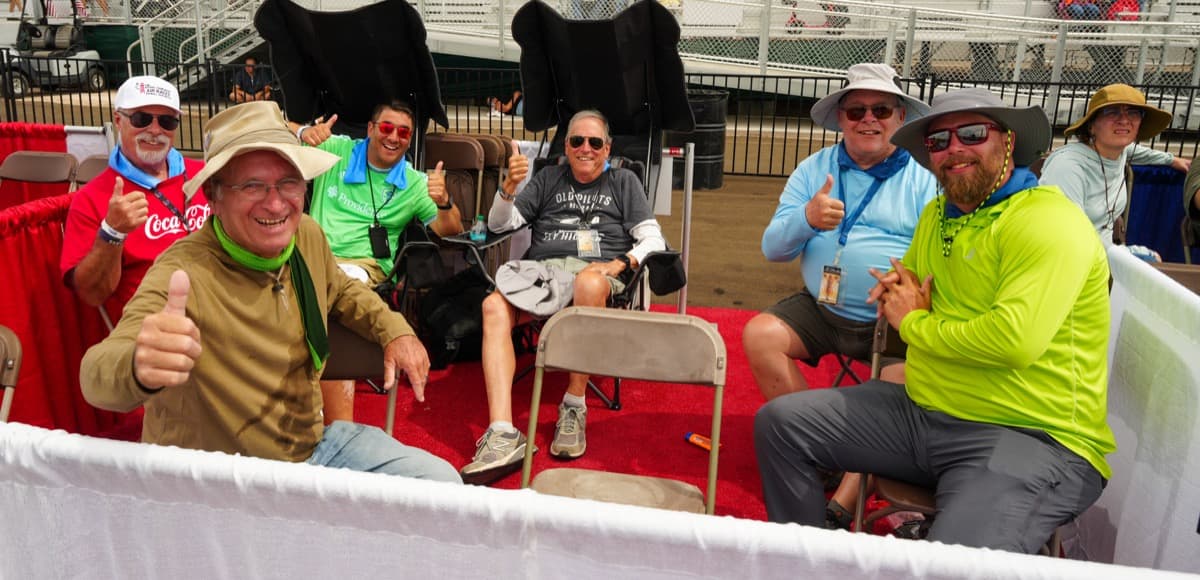
Between the six of them, these fans have more than 200 years attending the National Championship Air Races. Yes, they were very excited to be at Roswell!

“I wasn’t a fan until they came here. Now I am,” said Jeff Thomas of Lubbock, Texas.

One of the most dedicated air racing fans is Brent Wilson.
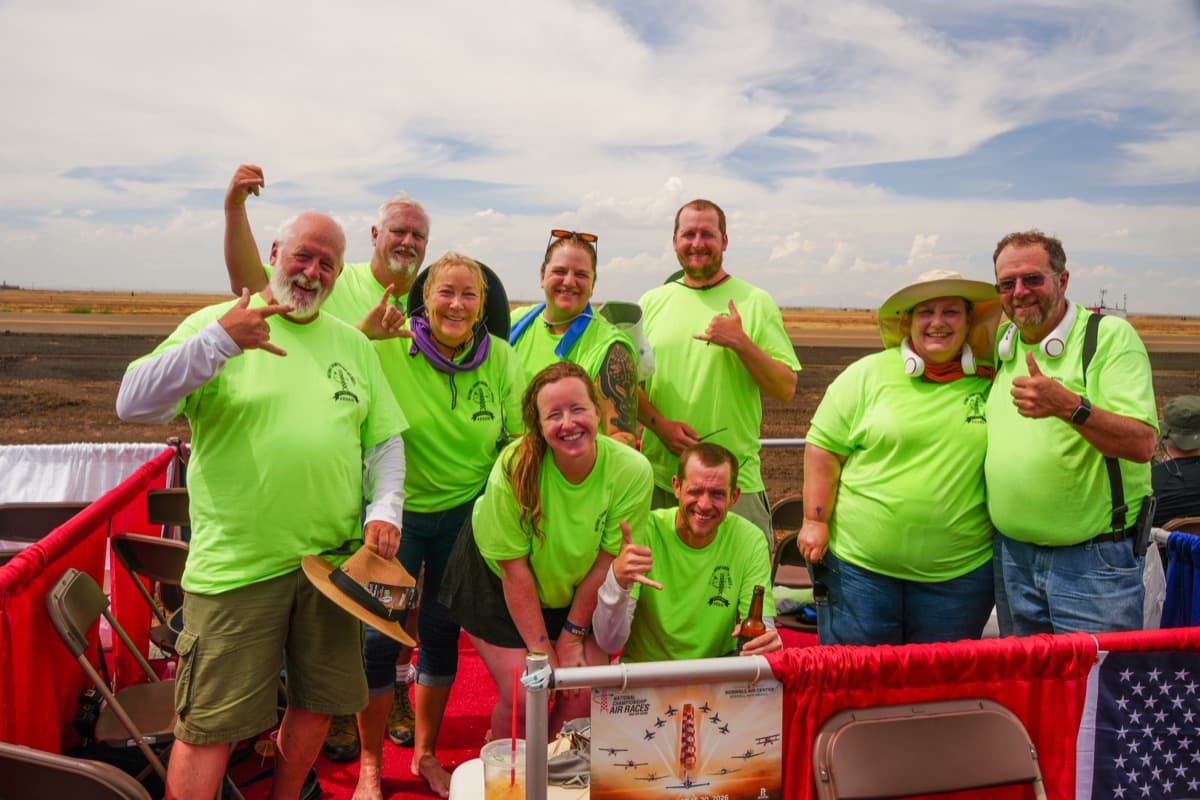
The September Family! Brent Wilson, left, started going to the air races in 1969. He brought his sons starting in 2001, and now they’ve expanded to bring fiancees, girlfriends, and other new family members.

“This is my September family,” he explained as he waved from his box seats on the flight line, surrounded by other neon green shirted fans.

“My first race was 1969,” he shared. “I started bringing my boys in 2001. This is our first year with the gals. It’s been a father-son tradition. Now we added fiancees and girlfriends. It’s been very, very cool.”

Wilson also drafts strangers into attending the air races.

“We find people and bring them in,” he said. “The whole day is on us! We pay it forward. Over the years, we’ve met so many great people.”

A full-circle moment unfolded on the final day of the races when a Roswell native and her boyfriend got engaged at the races. The couple previously lived in Reno, where they attended the National Championship Air Races many times, carrying their connection to the event from its longtime home to its new one.
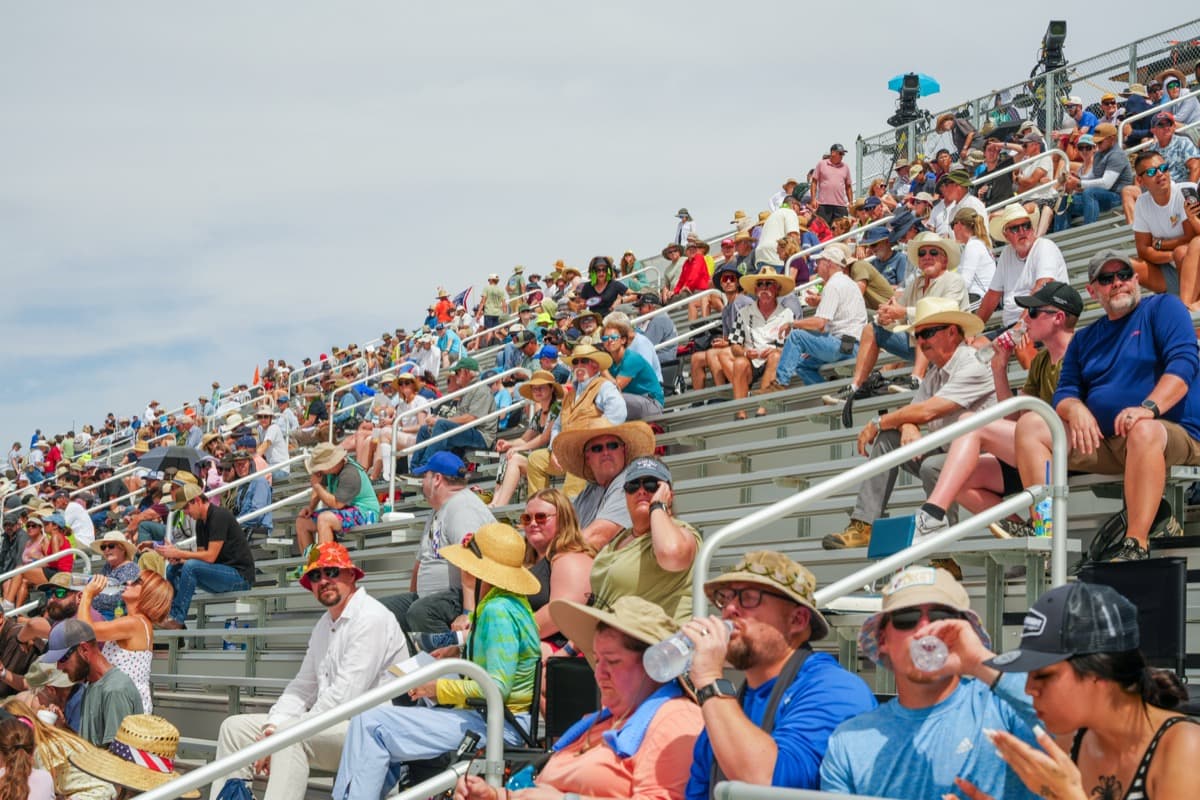
The permanently-installed grandstands offered a great view of the main straight and start/finish line.

While racing is the main event, the event has grown to include an air show and static displays.

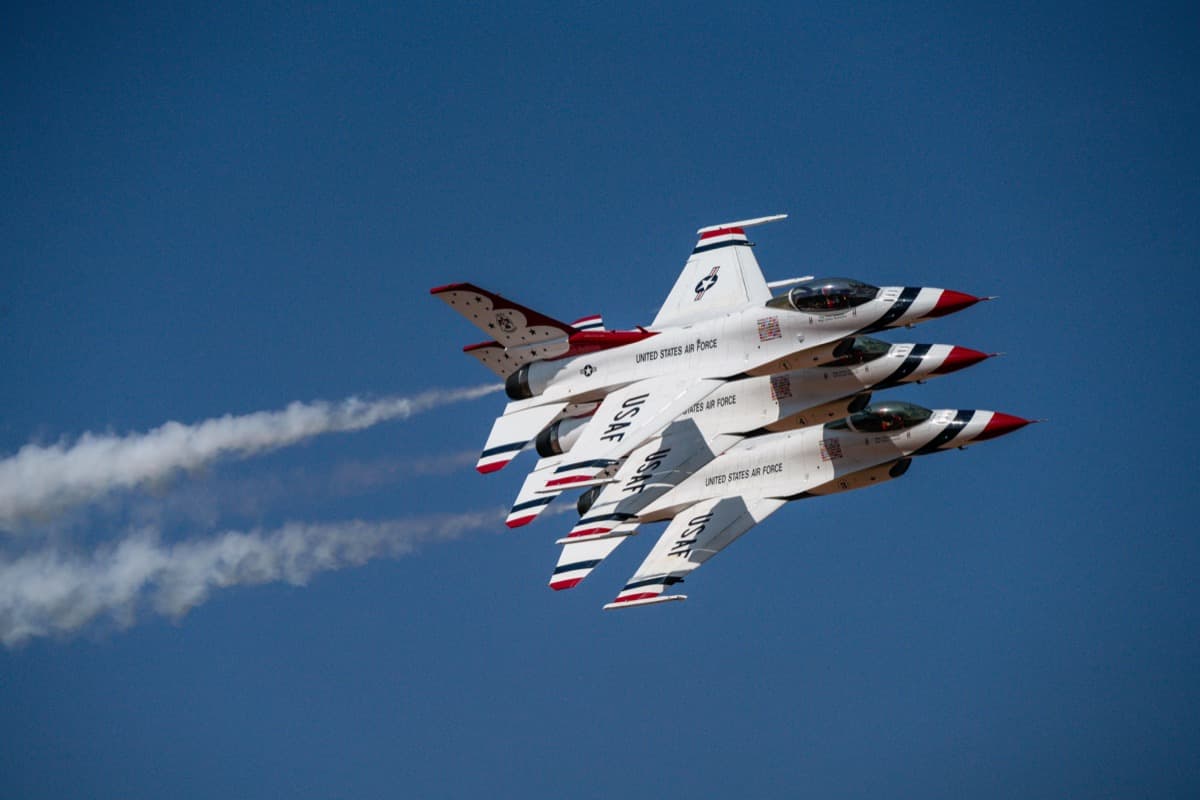
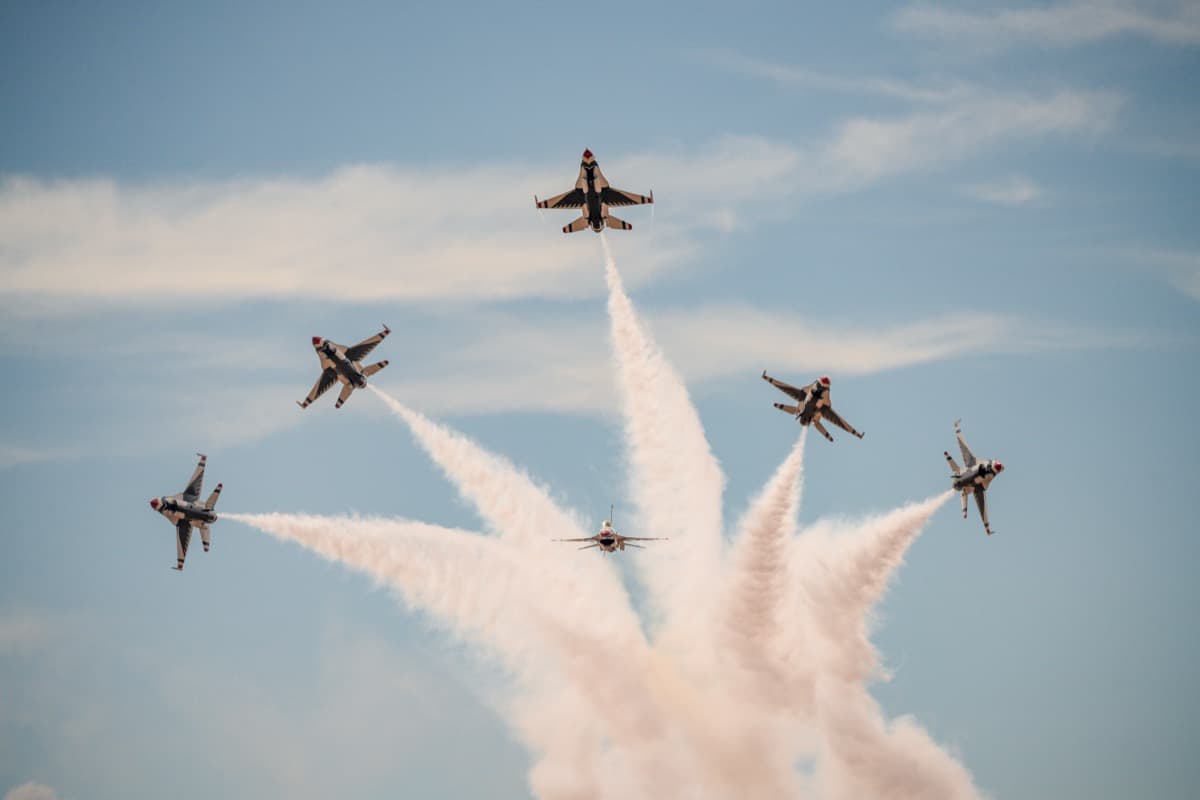
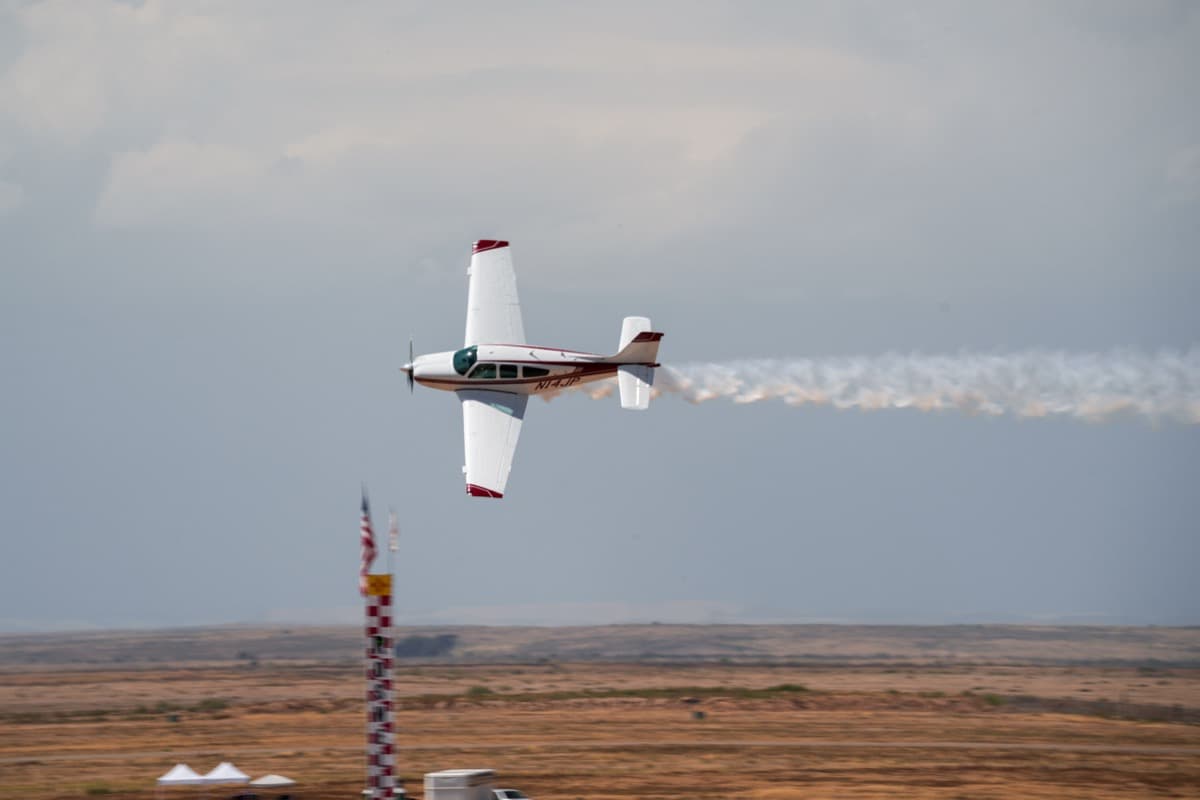
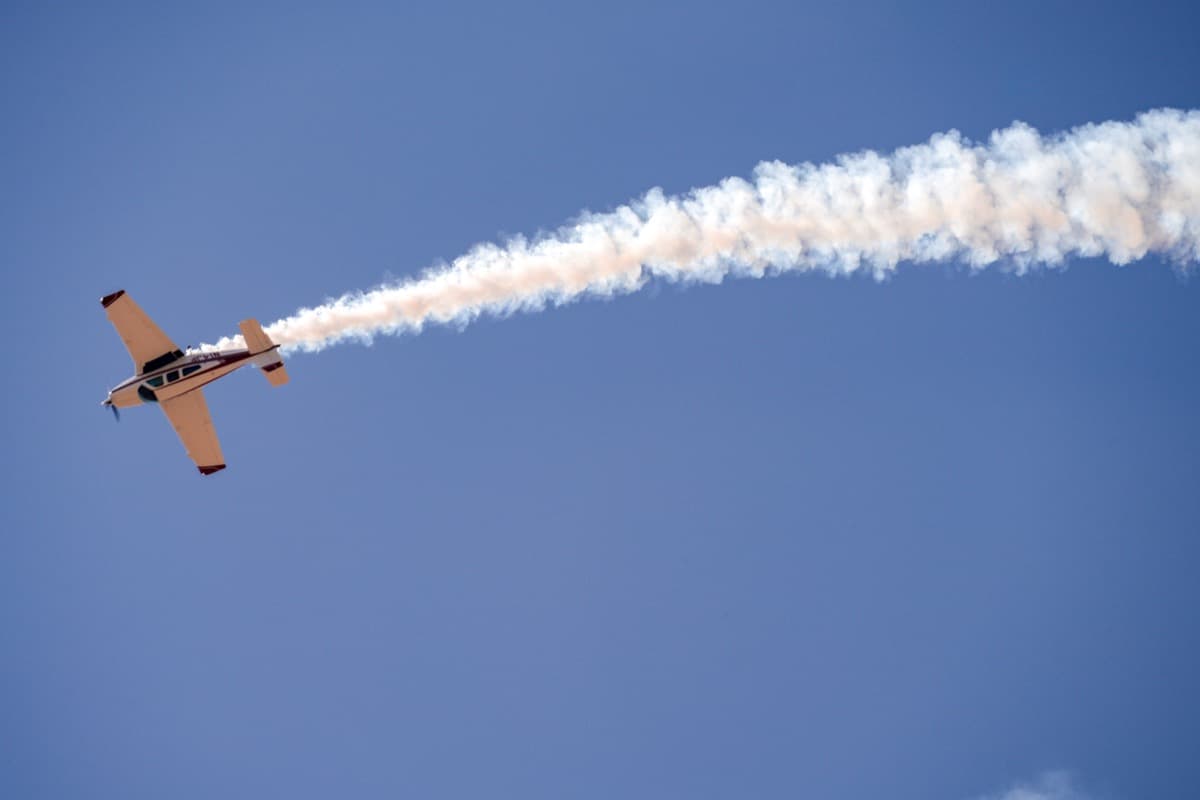
This year featured the U.S. Air Force Thunderbirds, as well as air show performers, including Jim Peitz.
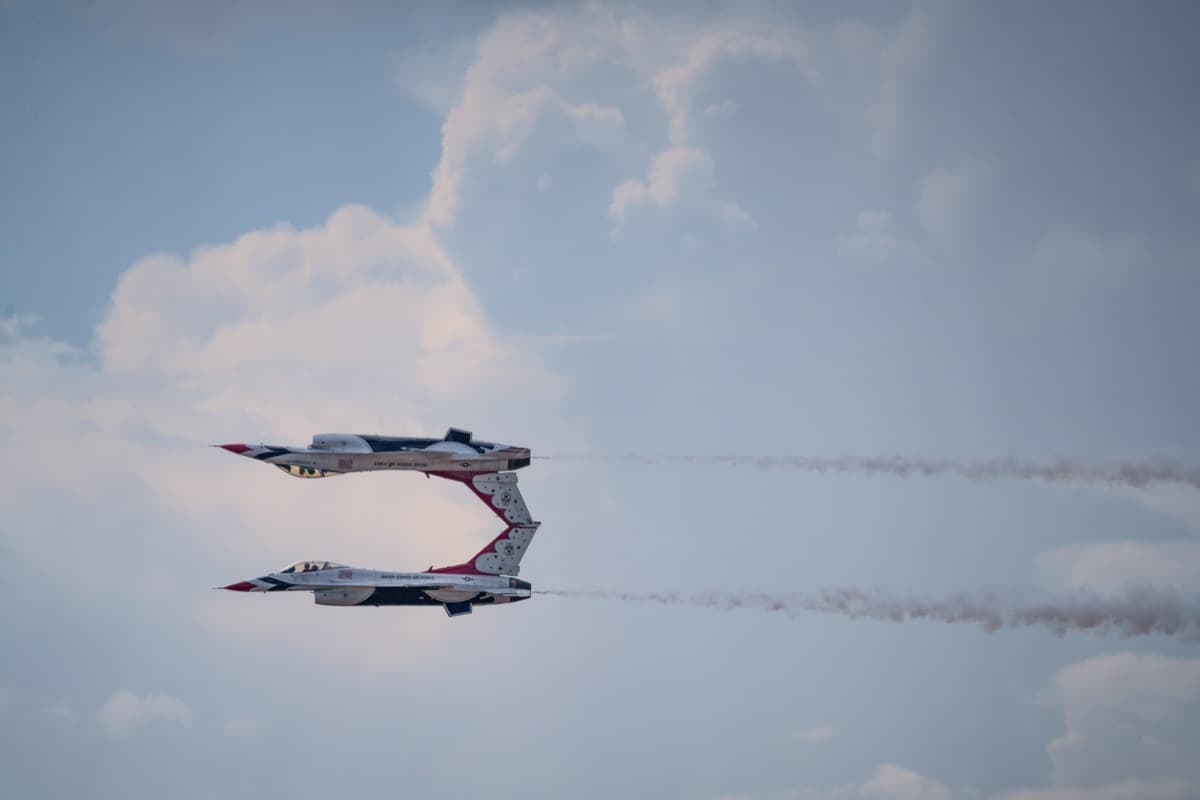
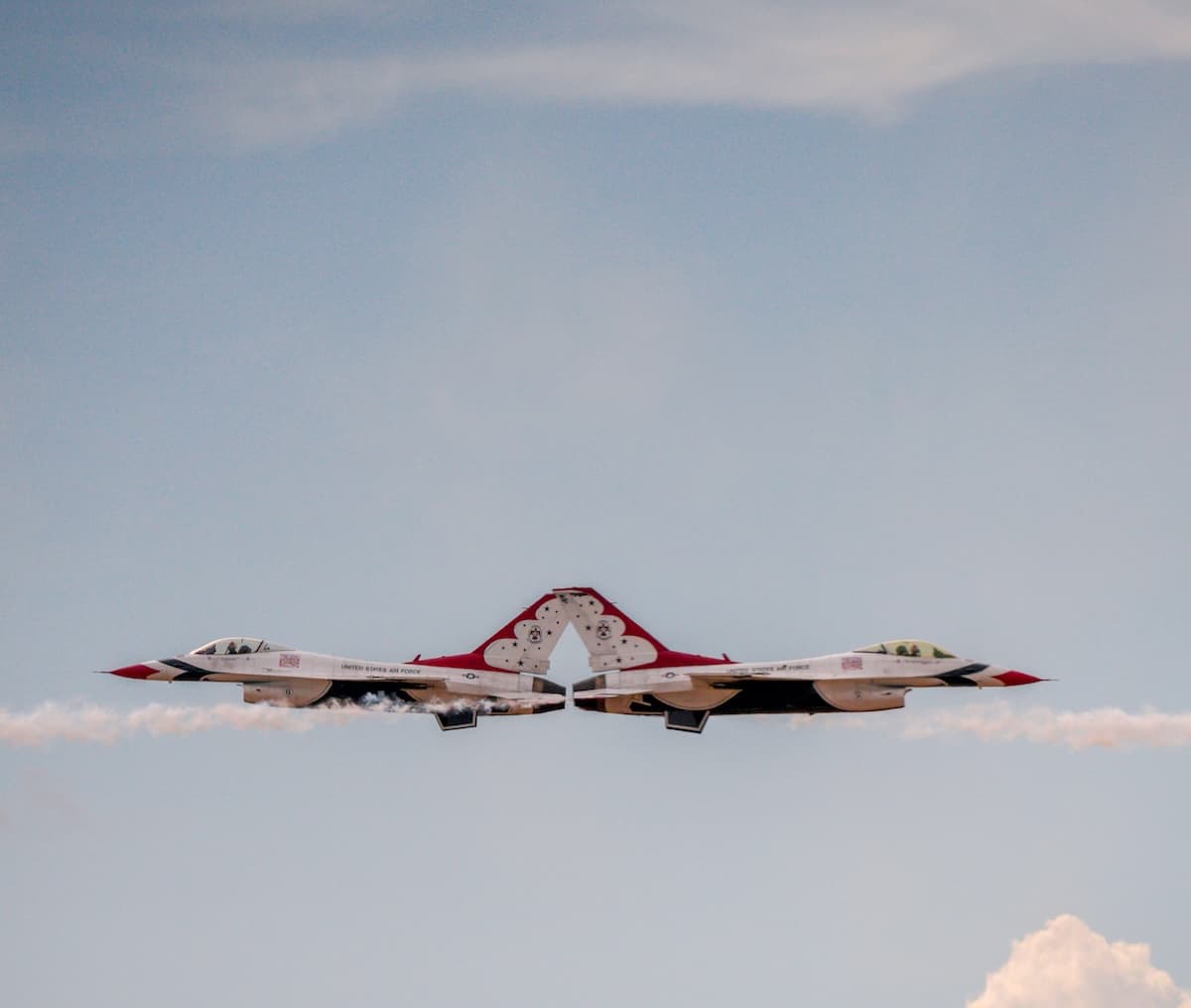
Two USAF Thunderbirds fly their mirror image pass for the fans.
Seeing double? The USAF Thunderbirds are very precise during their flight demonstrations.
Three of the USAF Thunderbirds demonstrate their precision flying skills.
The Thunderbird’s horizontal starburst at the start/finish line of the Roswell air races.
Wrong direction on the race course, but doing it right for his aerobatic display — Jim Peitz flies his F33C aerobatic Beechcraft Bonanza past the start/finish tower.
Jim Peitz shows off his aerobatic skills during his impressive routine in a Beechcraft Bonanza. This rare model F33C was fully aerobatic from the factory.
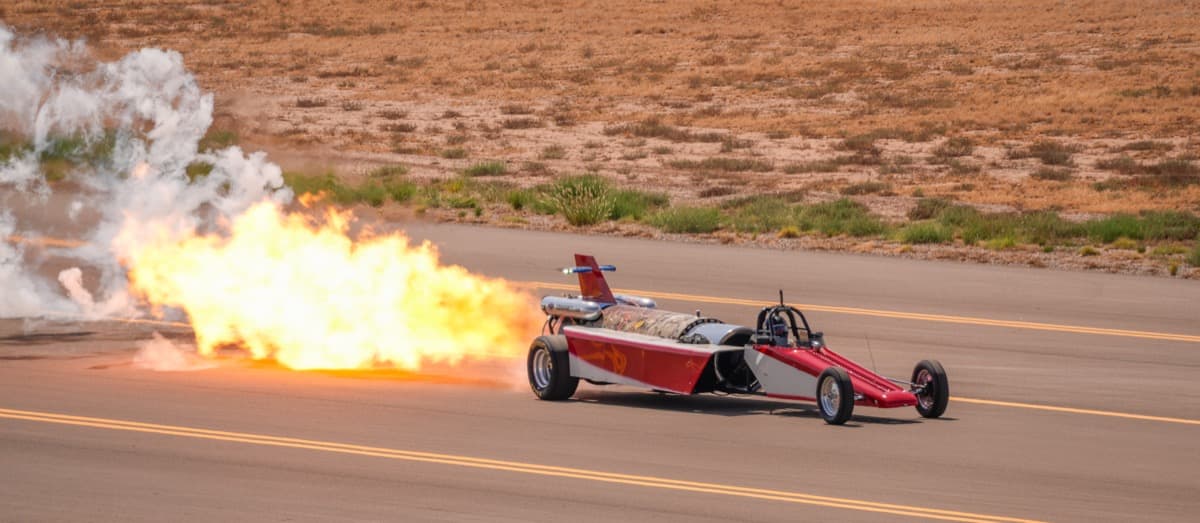
Bill Braack and his jet-powered Smoke-N-Thunder Jet Car dragster was an exciting part of the air show display.
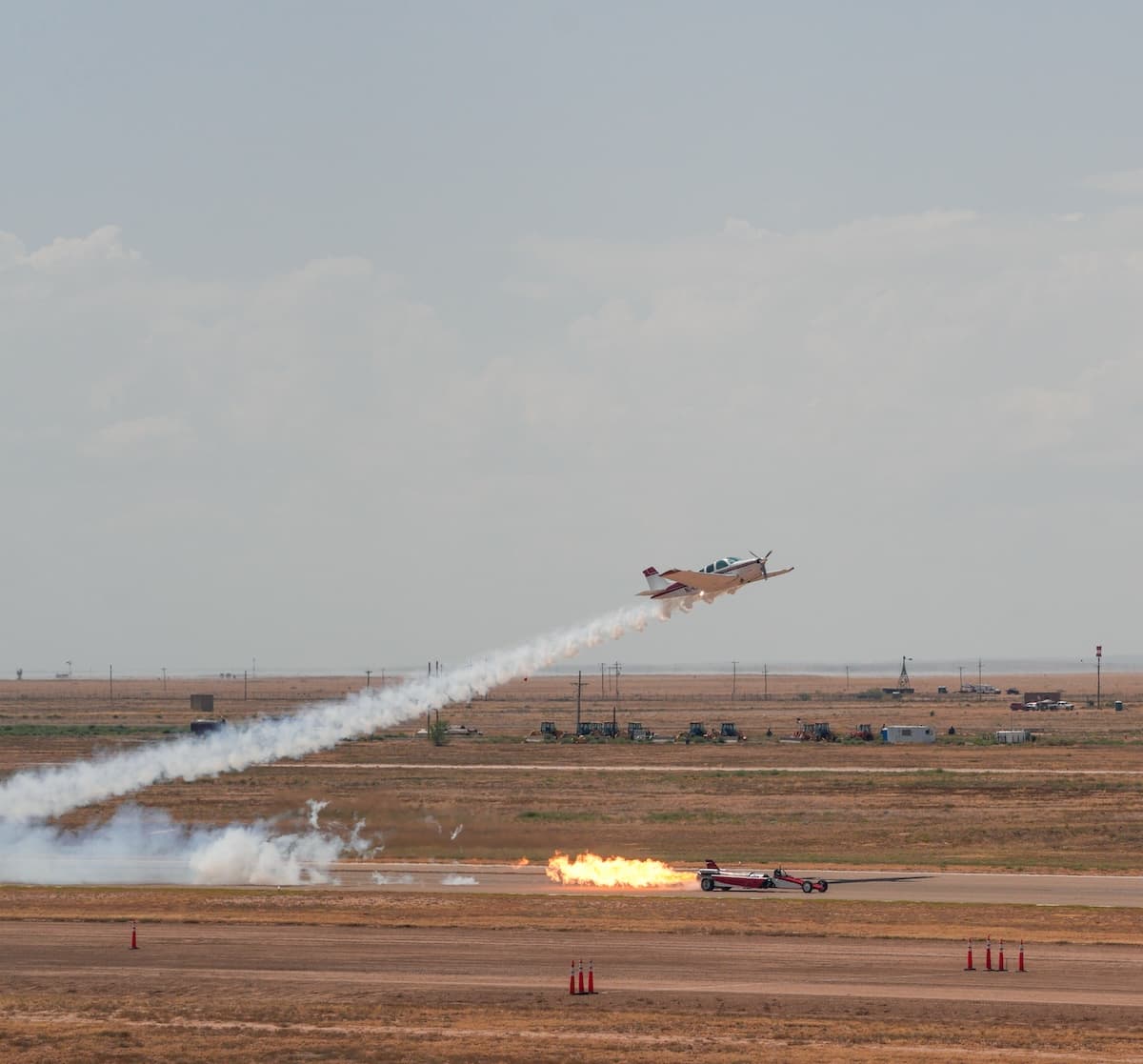
In a close contest, Bill Braack out-accelerates Jim Peitz during the air-ground drag race.

Static aircraft displays included a C-17 Globemaster II, two T-38 fighter trainers, the B-24 Liberator “Diamond Lil,” two Beech C-45s, a unique Spitfire recreation, several historic racing planes, a B-52 Stratofortress, and more.
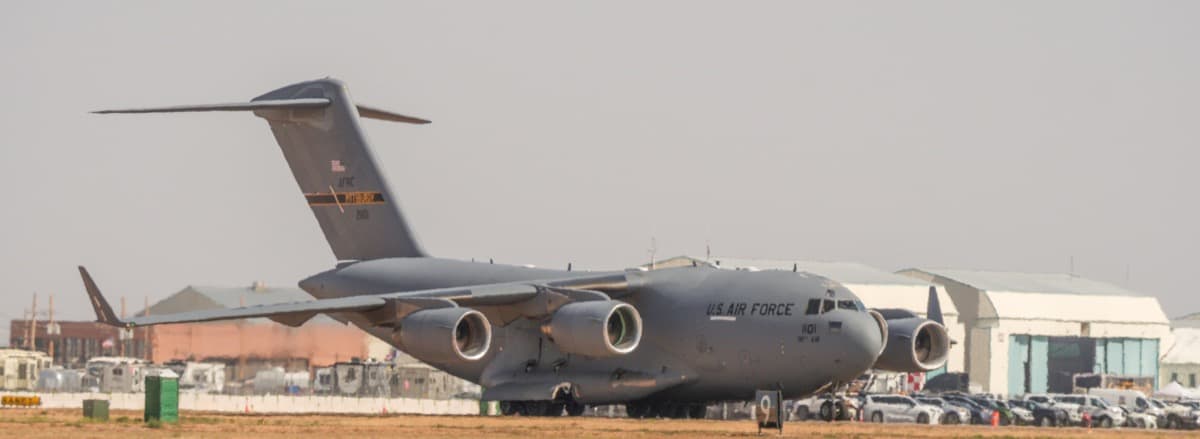
Too big for racing, this USAF C-17 was part of the static display.

Vendors included a wide variety of food, many types of aircraft-related goods, several T-shirt vendors, and an impressive number of local groups, including the New Mexico Pilots Association.
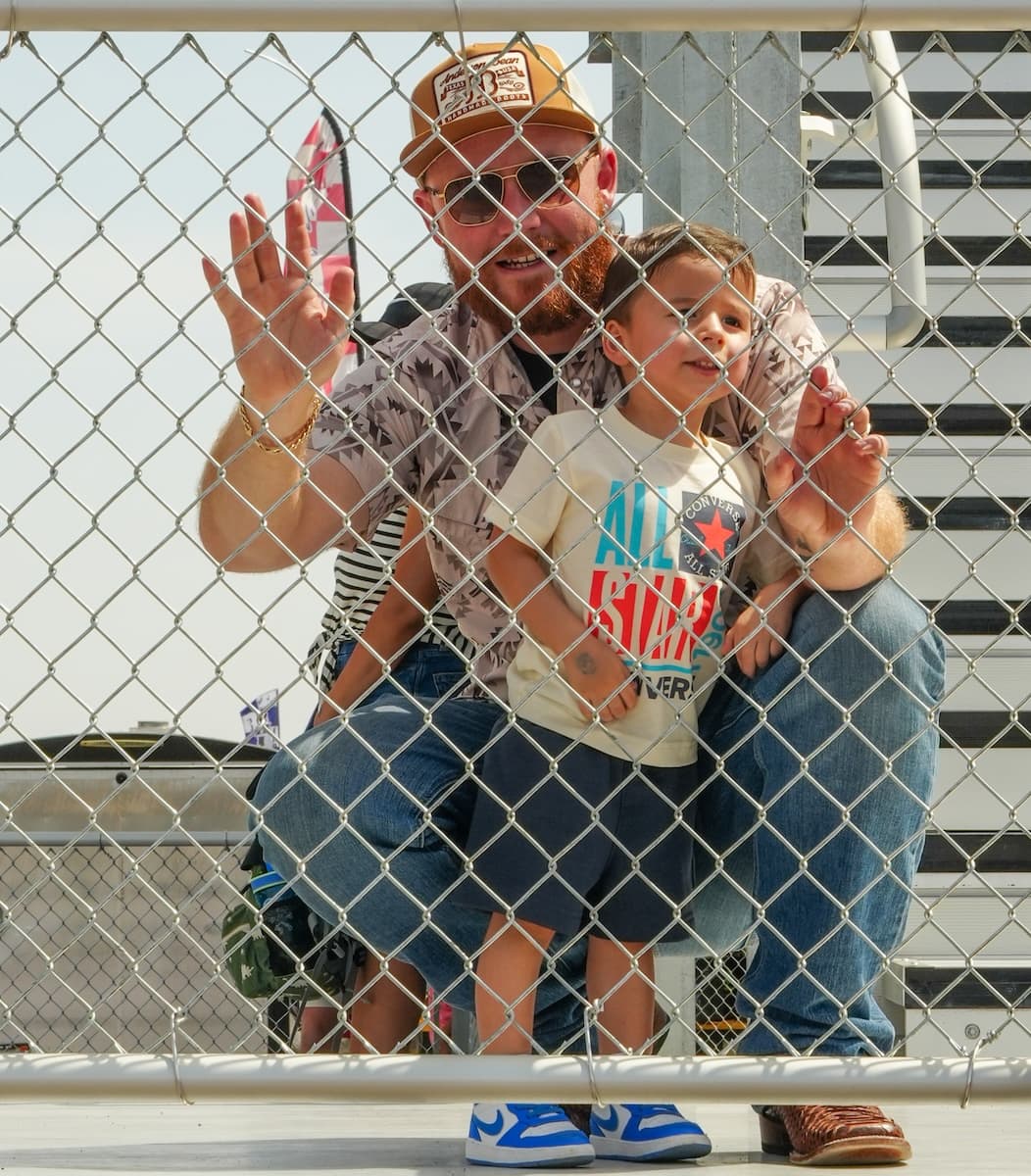
Spectators, volunteers, racers, staff, and city residents all seemed universally pleased with the growth of the races, and have high hopes for the future. All agreed there are opportunities for improvement, with high ticket prices and half-full grandstands top of the list.
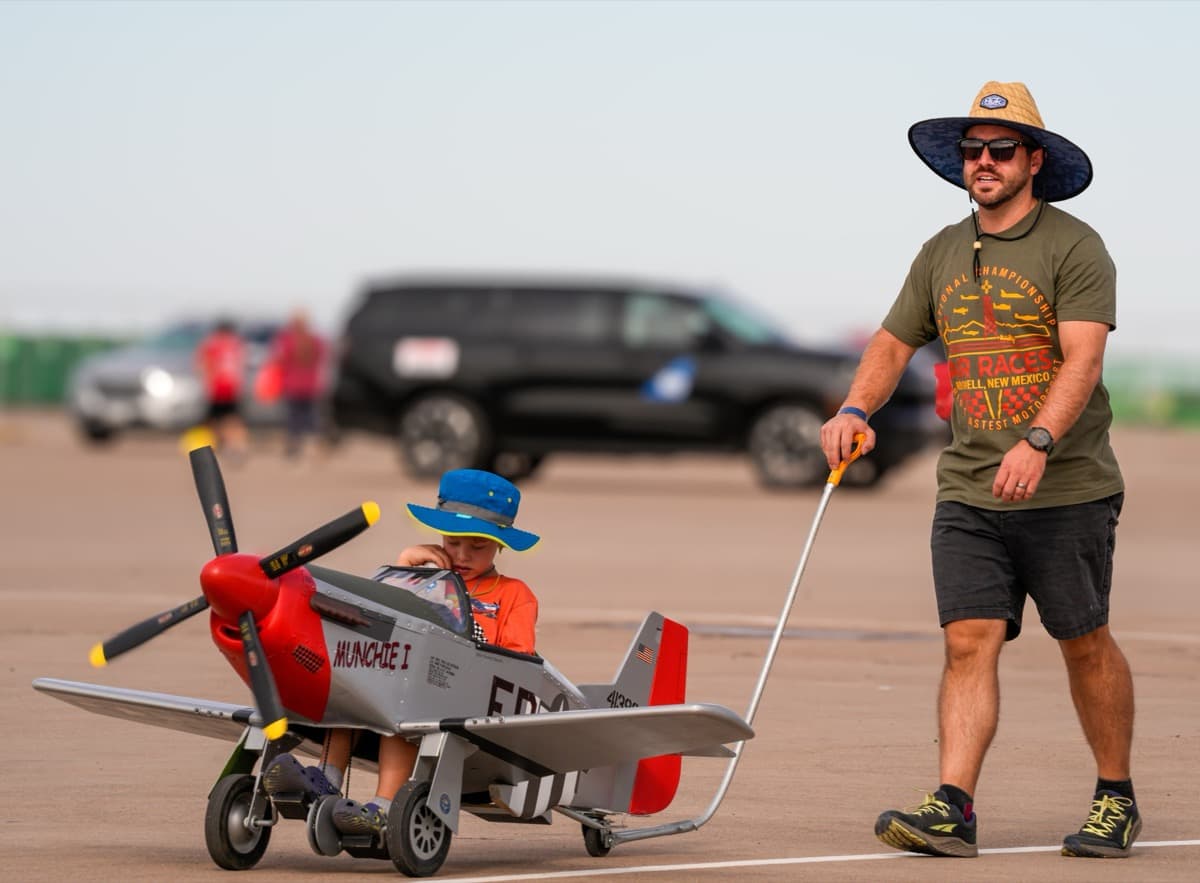
Experienced air race pilots will say their crew is what really makes the racing possible. Here, a crew chief is both navigator and engine for his pilot.

The Races

Twelve pilots and airplanes competed in the Formula One class, featuring purpose-built, single-seat aircraft powered by modified versions of the O-200 motor found in GA aircraft like the Cessna 150.

“Our tech specs for this class are strict and we have to meet them,” said multiyear racer Trent Woodworth. His Cassutt uses a fixed-pitch 55-inch by 62° prop that spins up to 3,700 rpm and makes about 150 hp, compared to the engine’s usual 100.
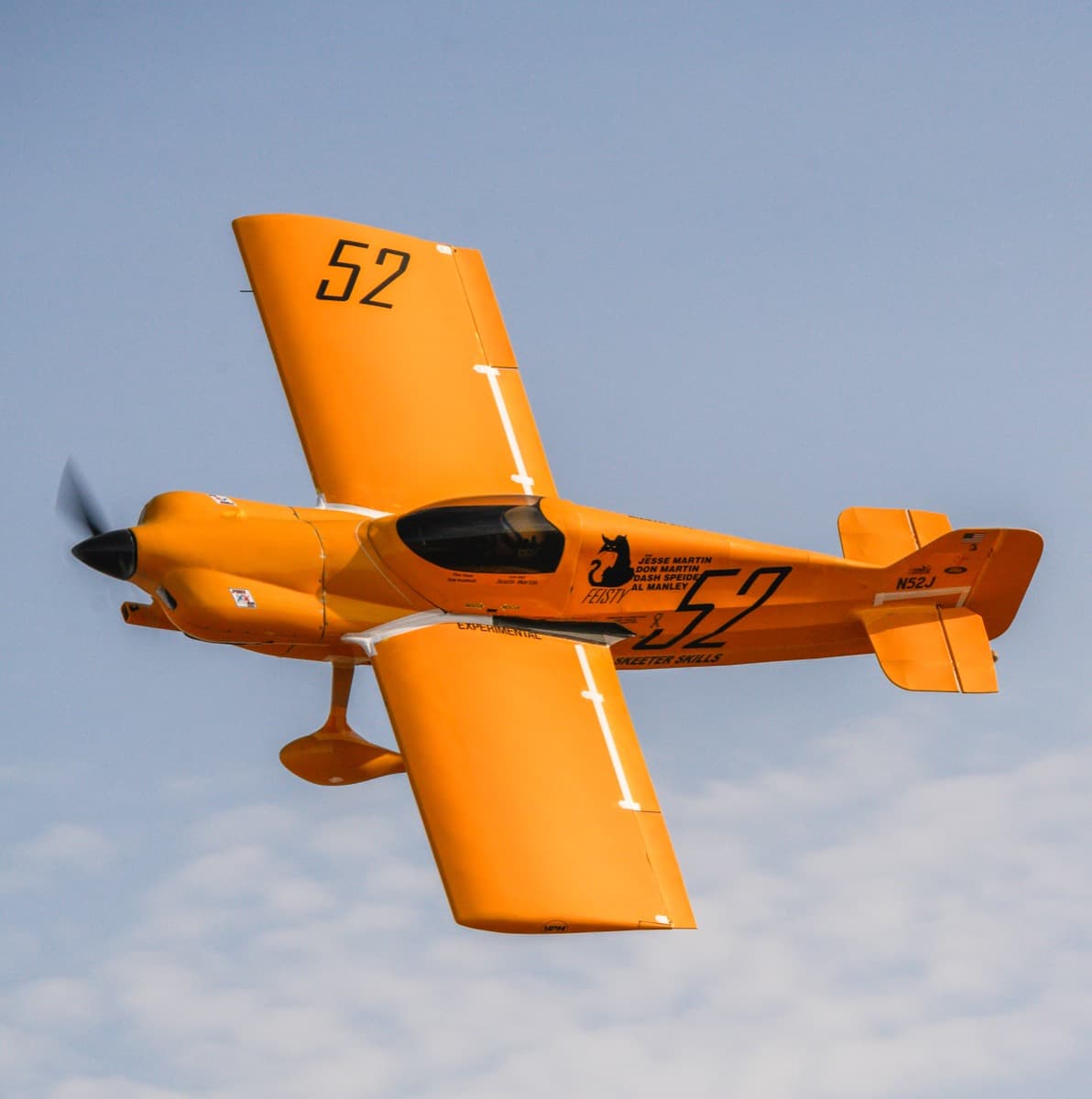
A closeup of Trent Woodworth and “Feisty” showing just how compact the Formula One racers are.

“When wound up at speed, the control forces are literally double a Cessna 172,” he explained.

The planes cross the fence at 100 mph and land at about 90. Pilots regularly sustain 3G and he has seen more than 4, noting that wake turbulence is a handful.

“The adrenaline is highest for me 10 seconds before the green flag drops,” he said with a grin. “You’re staring at the flag and the moment it wiggles…”
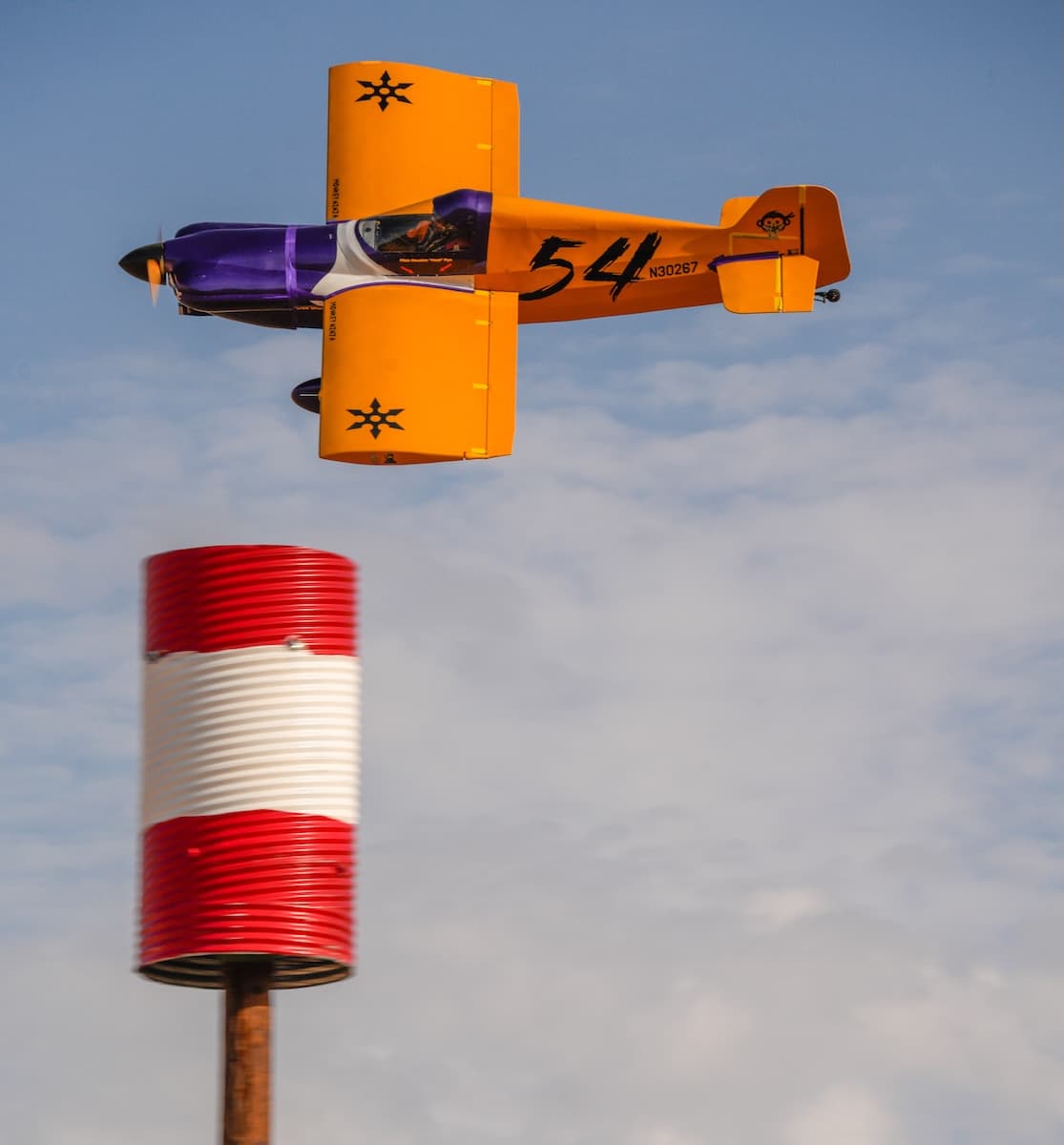
“Monkey Ninja,” flown by Houston Pye, was one of several mostly yellow Formula One race planes.

The 2026 Formula One Gold champion was Josh Watson from Wilton, California, in his “Fraed Naught” Gilbert DG2 with a speed of 250.404 mph.

The Biplane class is slightly slower and this year’s 11 competitors all piloted some version of the venerable Pitts biplane. Their stock motors produce about 180 hp with race versions closer to 225 hp. This year’s Biplane Gold champion was Tom Marden from Erwinna, Pennsylvania, in his Pitts S-1C “Second Hand” at a speed of 221.106 mph.
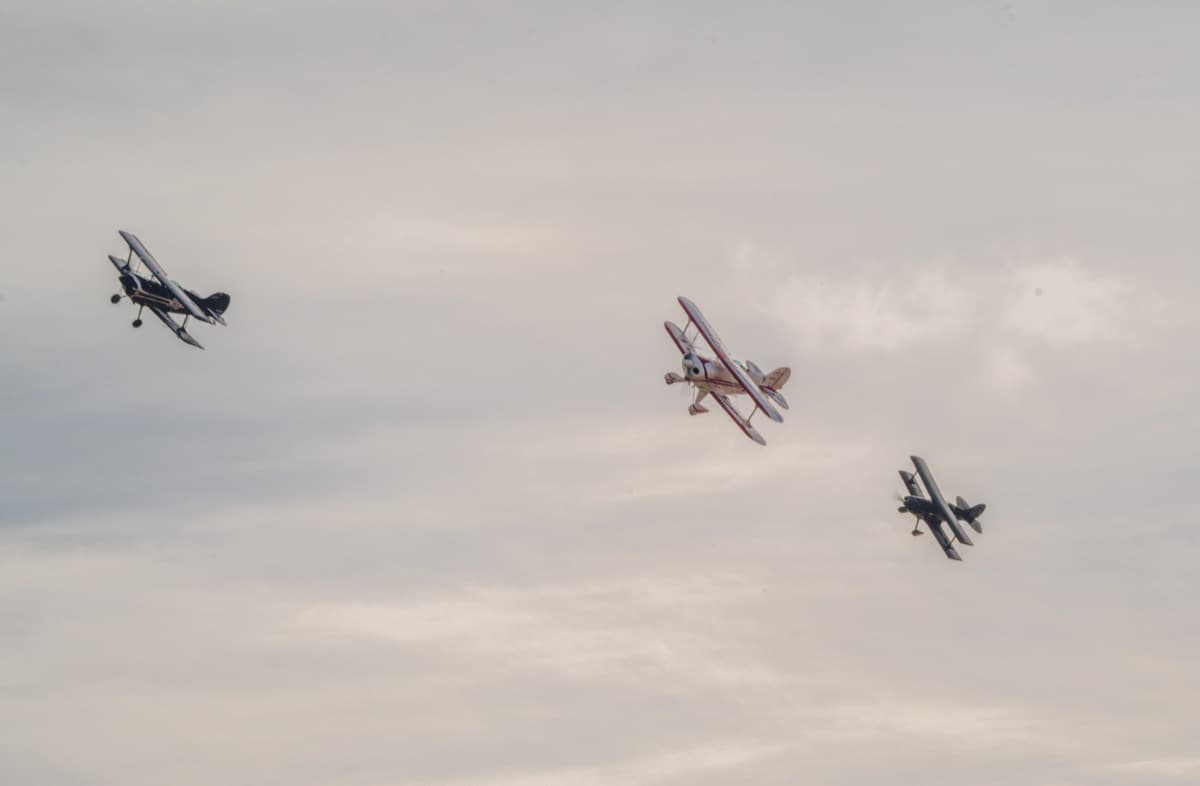
Three biplanes race around the course.

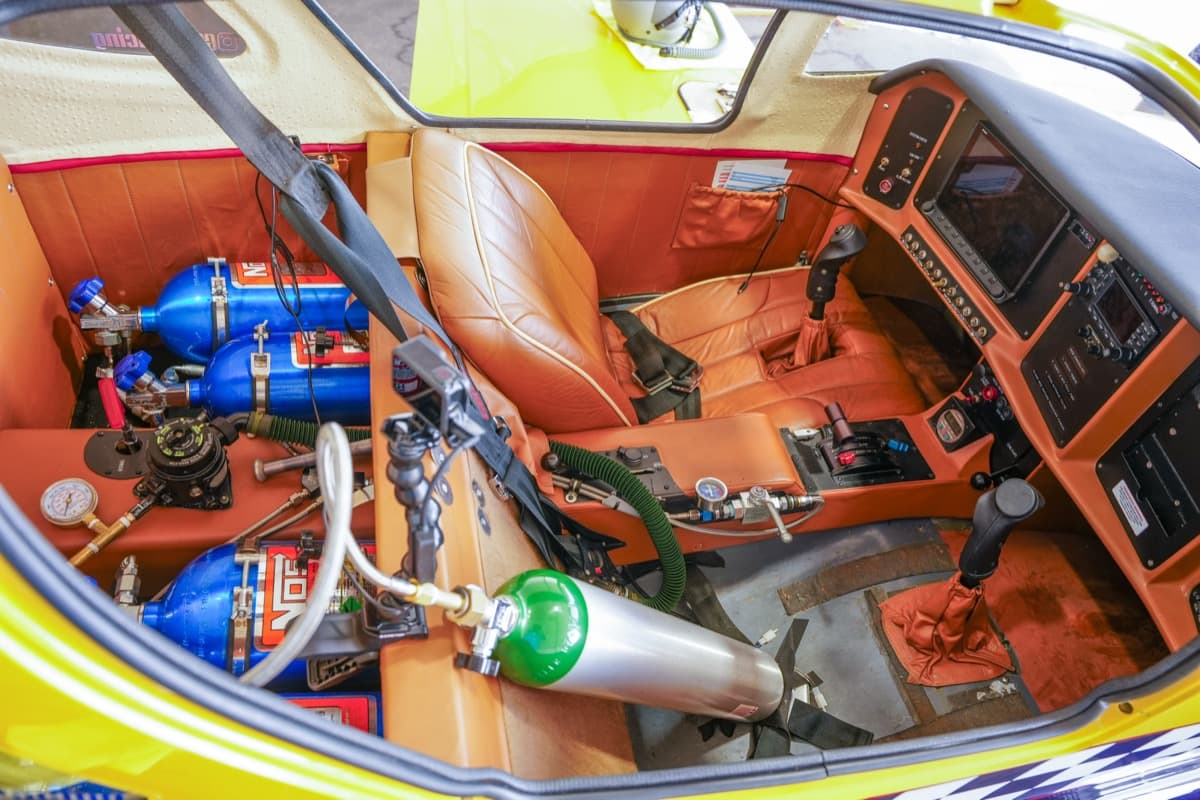
Technology really steps up with the Sport class of 15 heavily modified homebuilts — usually Lancairs or Glasairs with a few RVs. Sport Gold class winner Tom McNerney and his Lancair Legacy “Too Much” from Blue Springs, Missouri, had a solid win at 349.112 mph. Every little bit matters in these aircraft, which feature a long list of innovative and cutting edge technology, including multiple nitrous oxide tanks to richen the mixture.
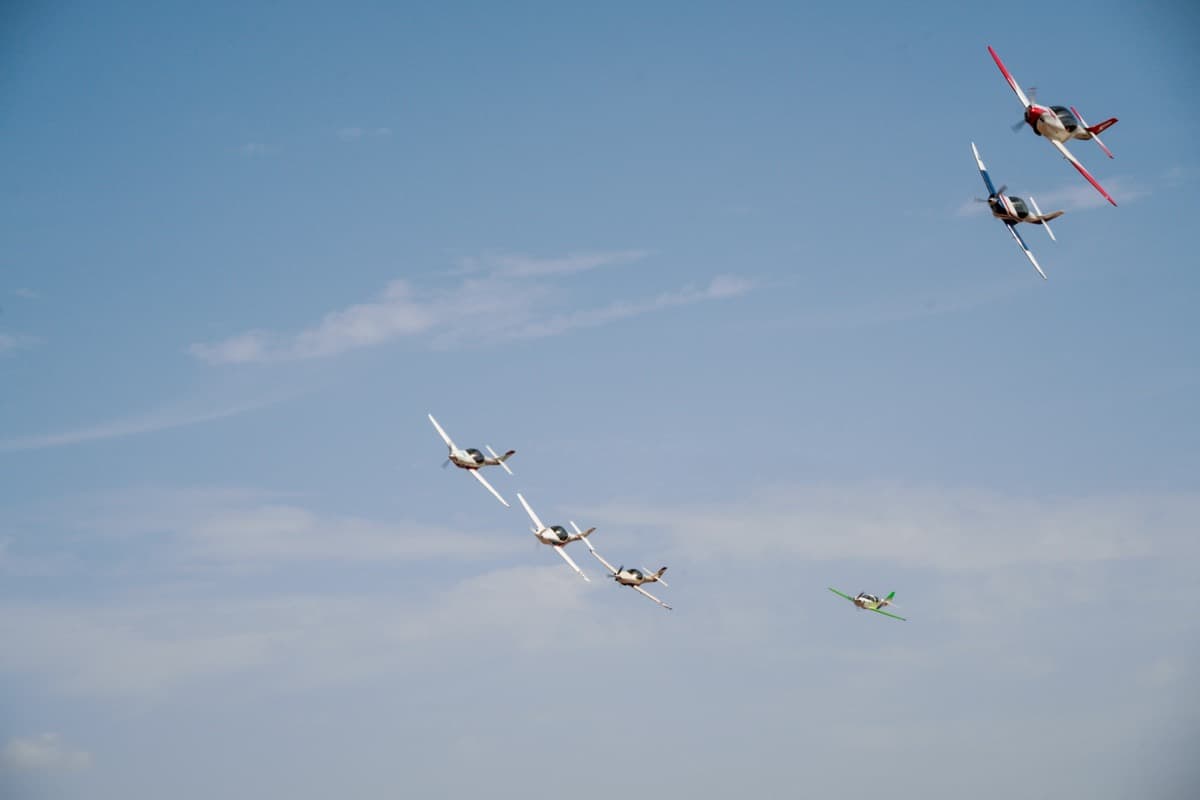
Six Sport class aircraft start their heat by jockeying for position at the starting pylon.
A little more oxygen for everyone! “Blown Budget” features four nitrous oxide tanks to put more oxygen into the air/fuel mixture. Crew Chief David Mahone, who is an anesthesiologist and “very familiar” with nitrous oxide, says this brings performance back to sea level output. The oxygen tank is used by the pilot during races.

The T-6/SNJ racing class is a crowd favorite due to their closely matching specs and the popular roar of their radial engines. Seven aircraft competed this year, many featuring quasi-military livery reflecting the history of these aircraft as military trainers. The AT-6C “Miss TNT” piloted by Lee Oman of Sequim, Washington, took the gold win at a speed of 233.179 mph.
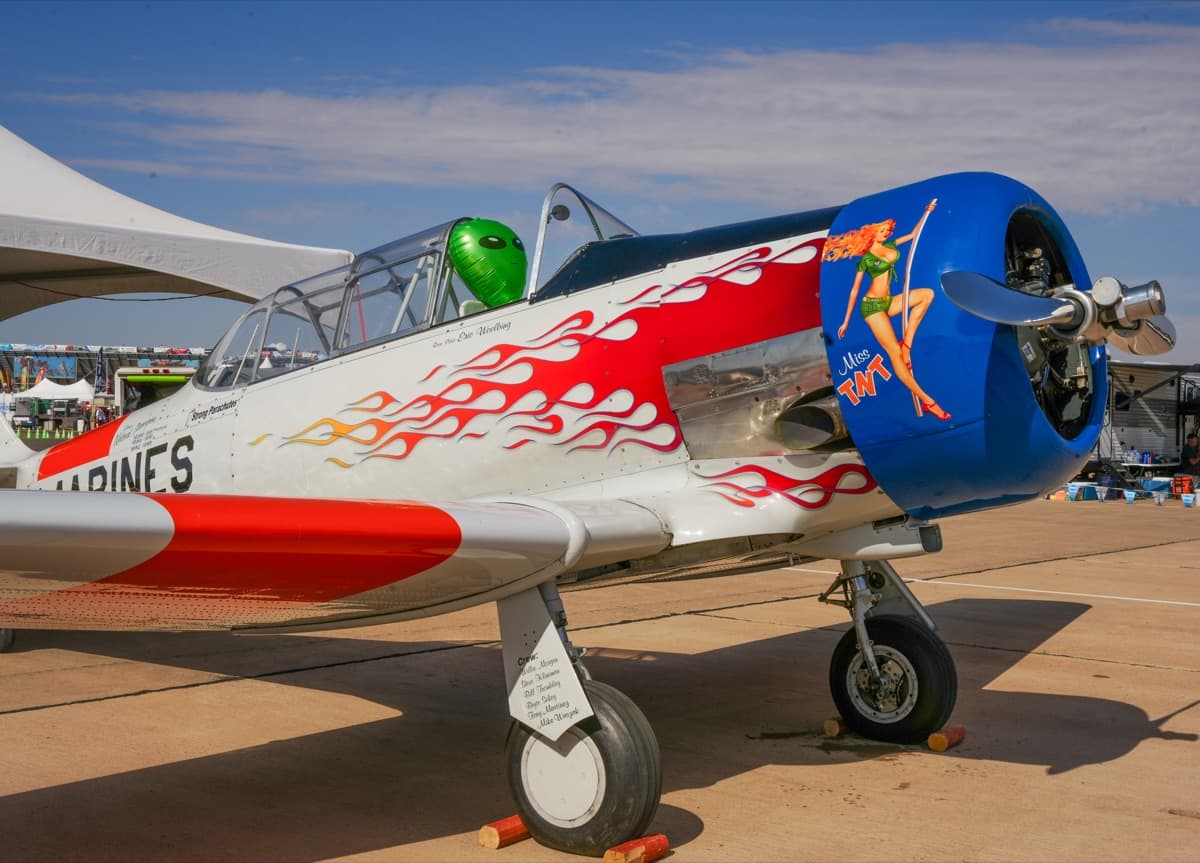
Semi-risqué nose art? Check. Flames on the side? Check. Quasi-military livery? Check. Alien co-pilot? Check! T-6 racer “Miss TNT” rests in the pits between races.
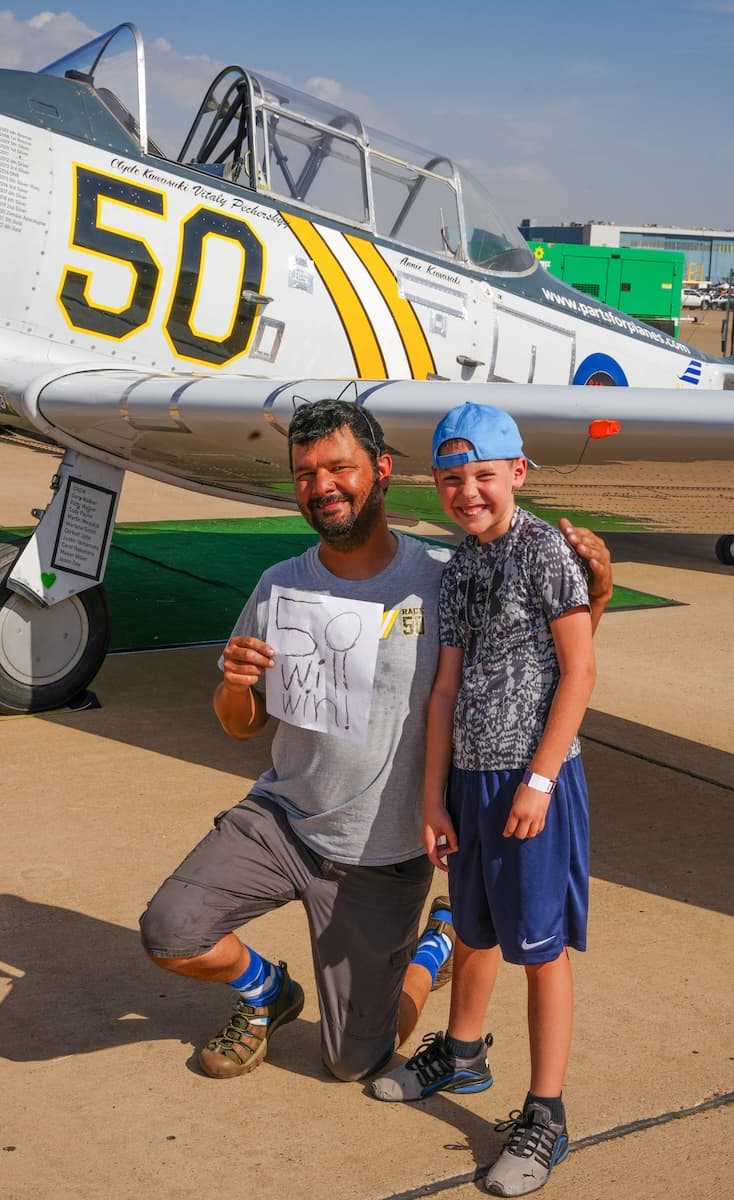
According to his mother, young Levi decided last year that T-6 Race #50, “Abracadabra,” was definitely his favorite plane. Bringing a handmade fan poster got him the chance to meet Ukrainian pilot Vitaly Pecherskyy, who gave him the full tour, including sitting in the cockpit.

An even split of five each Aero Vochodny L-29 Delfins and L-39 Albatrosses, all military jet trainers built in then-Czechoslovakia, made up the Jet class, with Gold winner Jason Googe from Savannah, Georgia, taking the win at 495.908 mph in his modified L-29, “ArcAngel.”
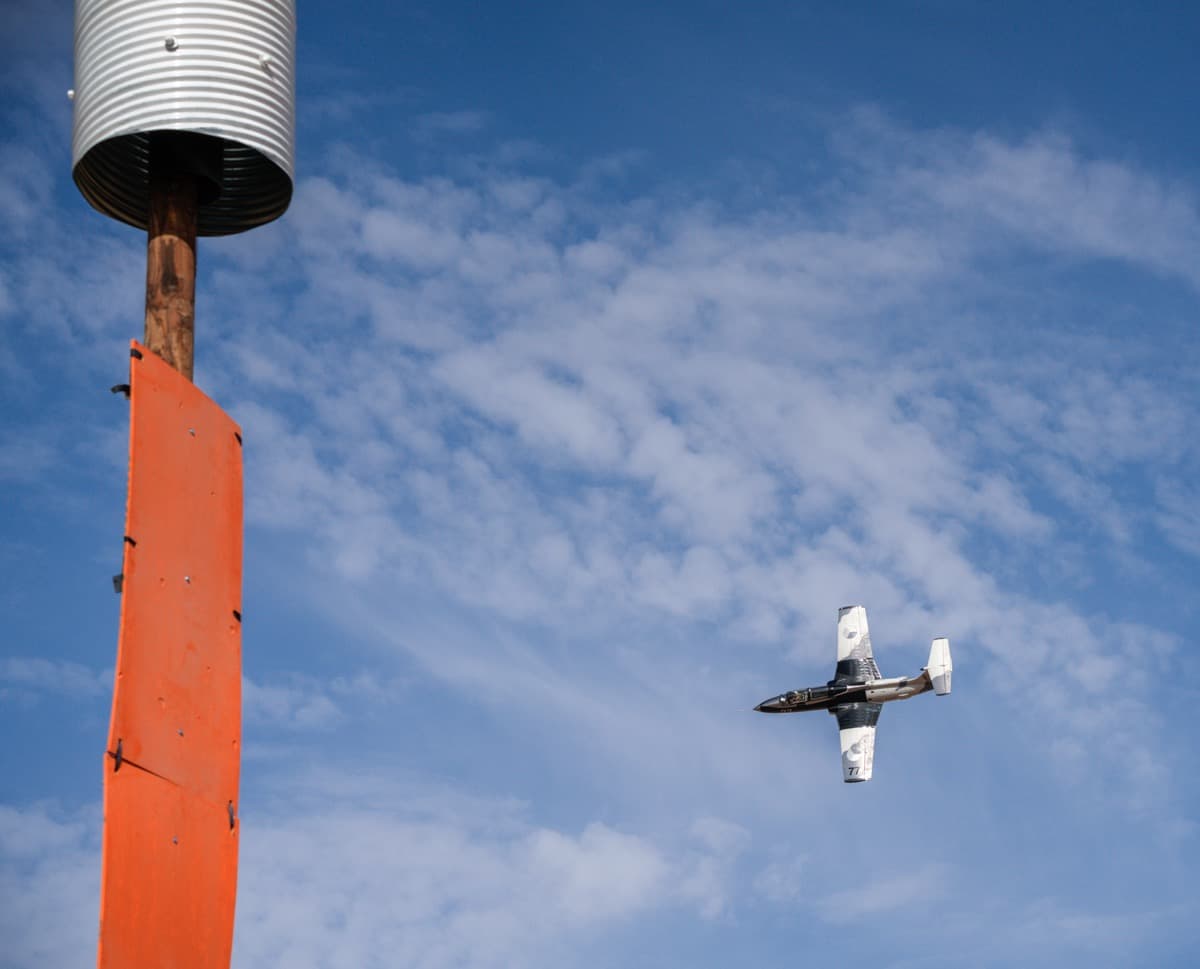
Jason Googe’s L-29 “ArcAngel” rounds a pylon, showing how low the aircraft race.

These jets are just part of the reason the National Championship Air Racing is called “the fastest motorsport on Earth.”
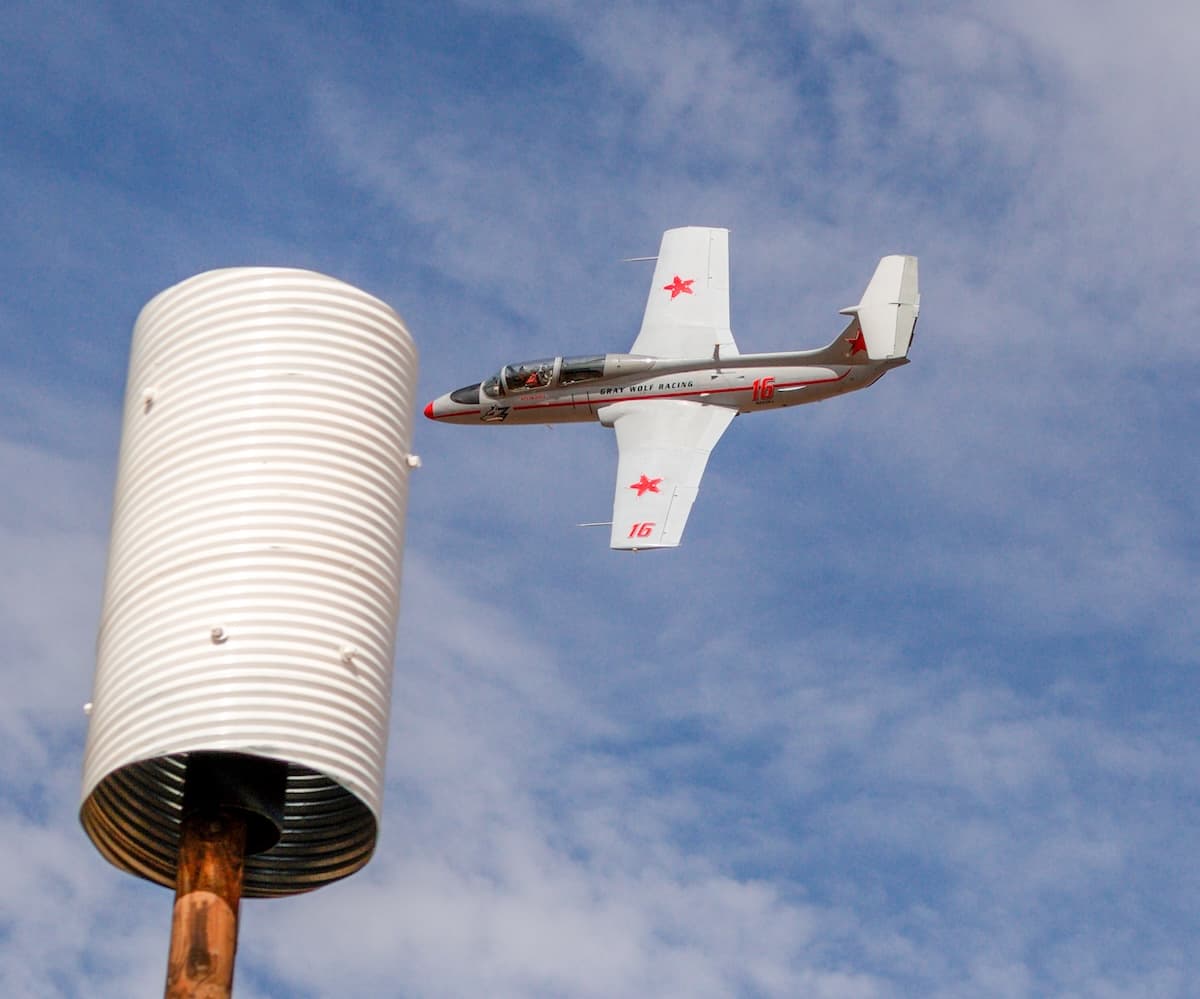
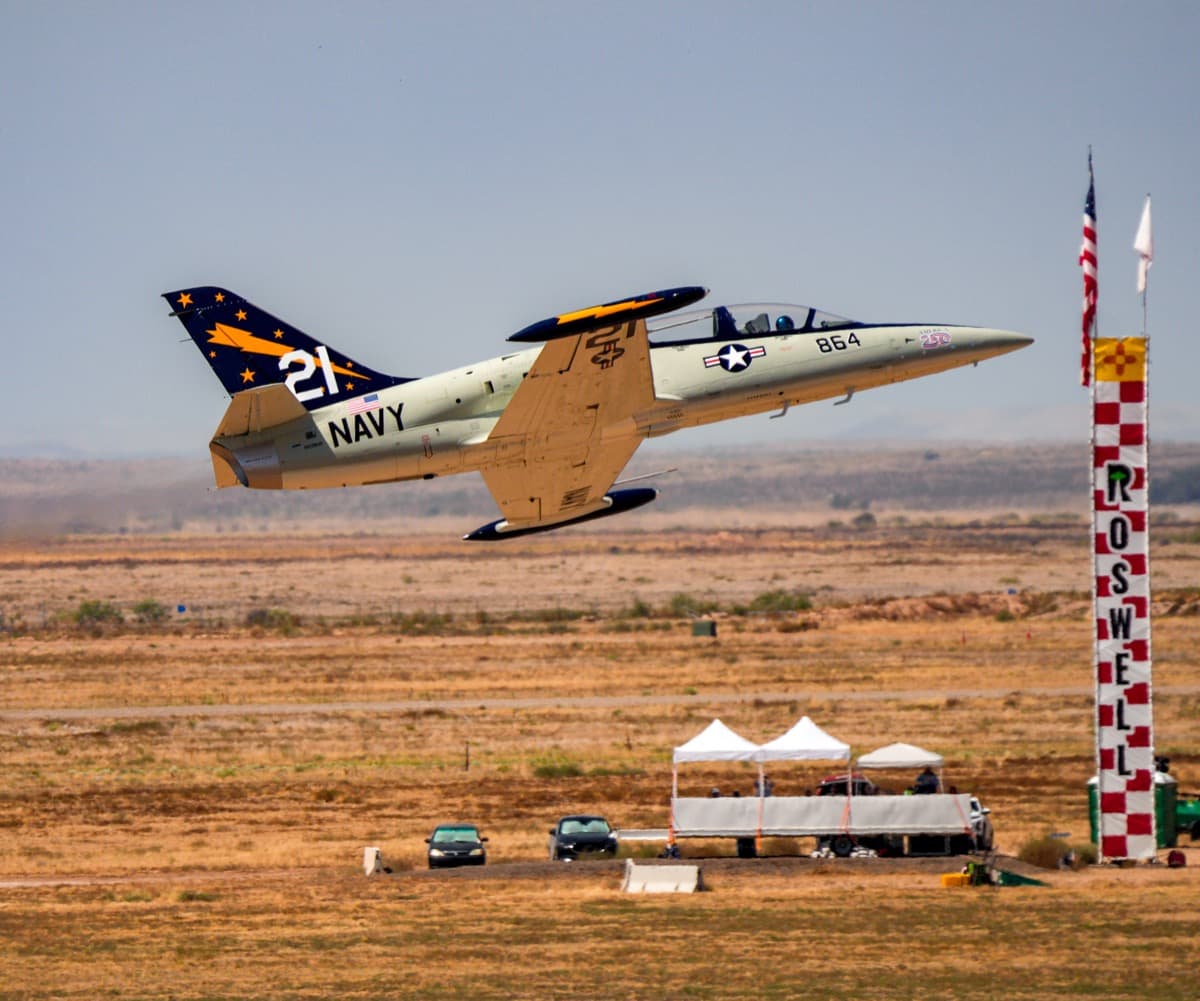
“Gray Wolf,” Kevin Roll’s L-29 Delfin, rounds a pylon at the start of the course.
Matt Menza brings “The Patriot” L-39 past the start/finish tower on takeoff.

A huge crowd favorite is the Unlimited class, this year made up of 11 P-51 Mustangs, one Hawker Sea Fury TMK 20, and a Yakolev 3UR-2000. These vintage warbirds bring the sound of 12-cylinder and radial motors to an appreciative crowd.
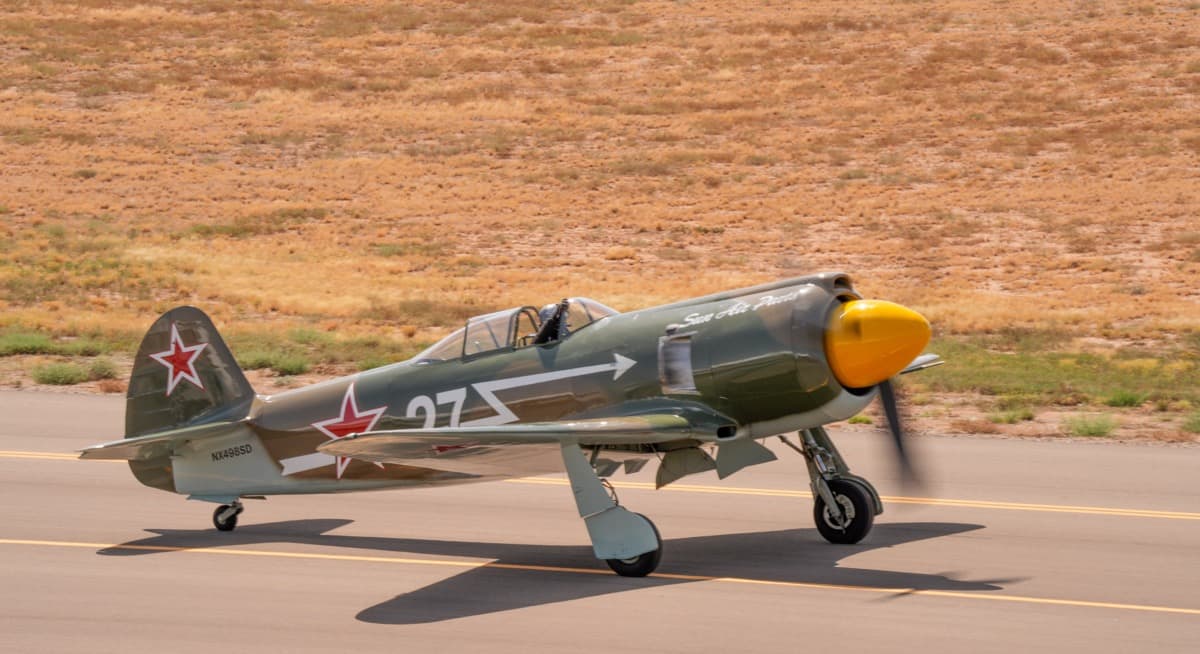
Well-known race pilot Bernie Vasquez taxis the Yak 3UR-200 “Miss Trinidad” past the grandstands.
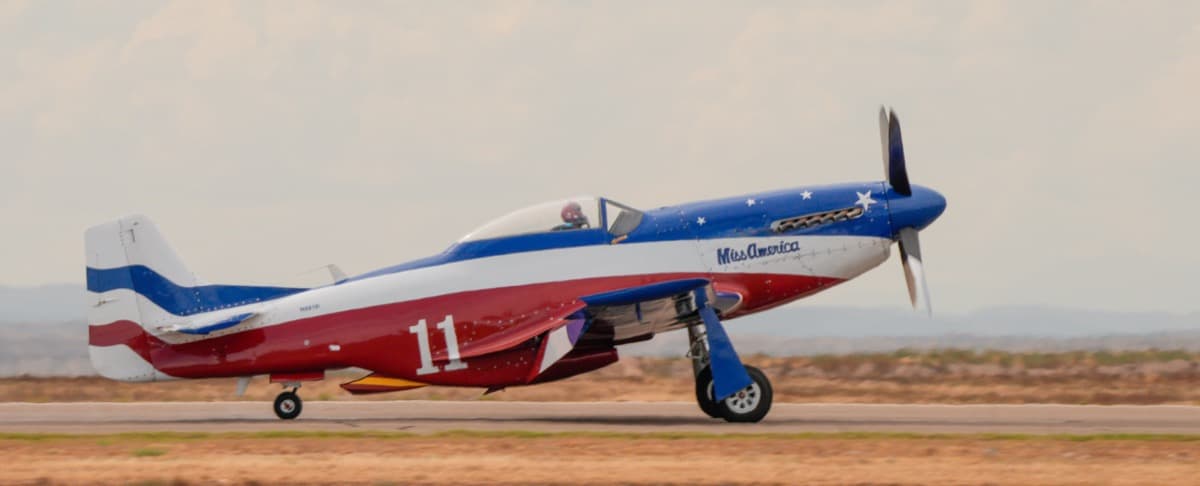
Unlimited class P-51 “Miss America” was a crowd favorite, returning after several years of hiatus. Many spectators remembered building various models of this very plane during their childhood.
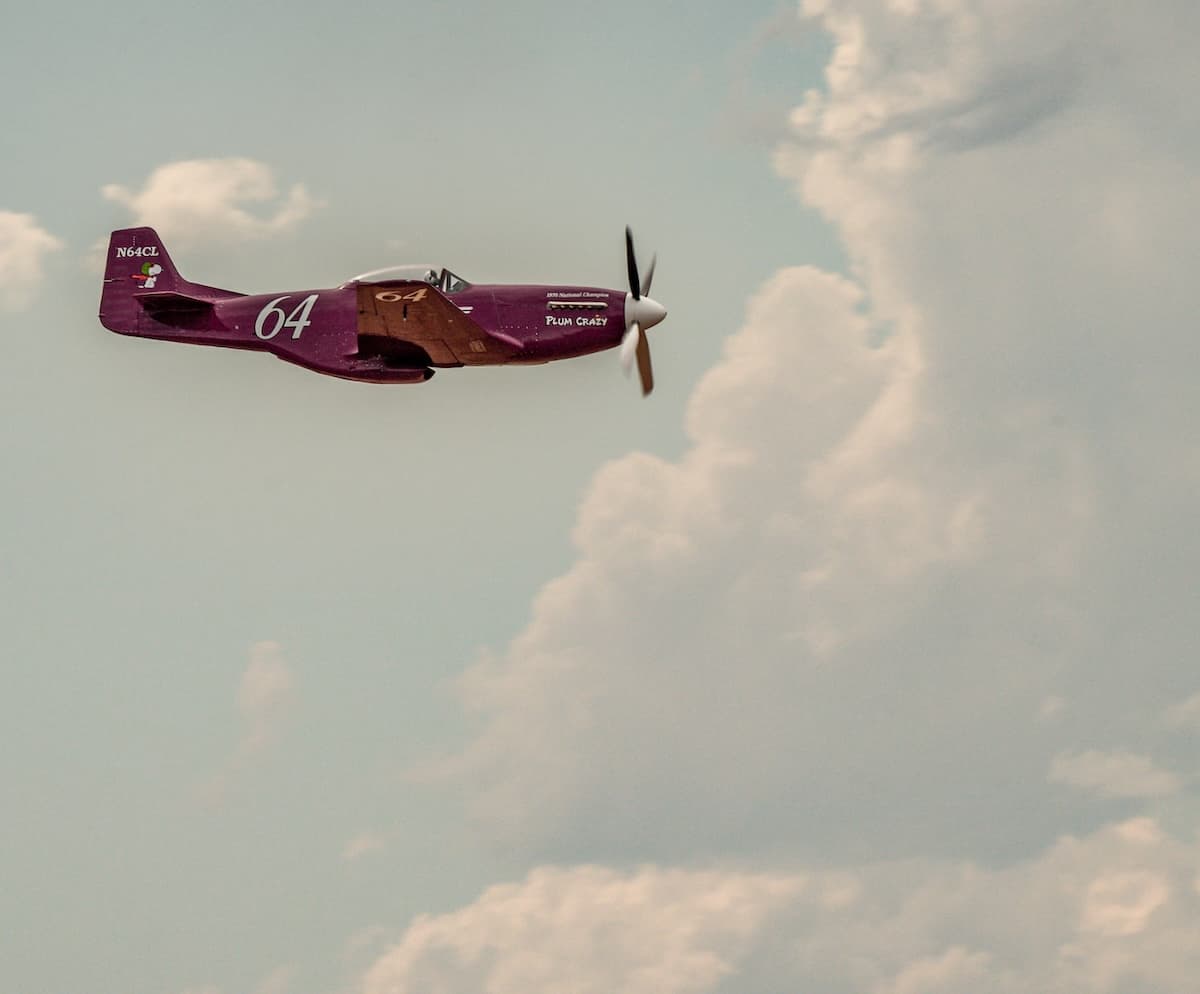
Vicky Benzing flies the P-51 “Plum Crazy” during the races.

After missing last year’s races, this year’s Gold champion was Steven Hinton Jr. from Chino, California, in the popular “Bardahl Special” P-51D. Hinton won with a time of 432.897, but qualified with an astounding 497.473 mph, an event speed second only to Bob McCormack’s 524.975 mph in the jet L-29C “Athena.” (Both aircraft are substantially modified.)
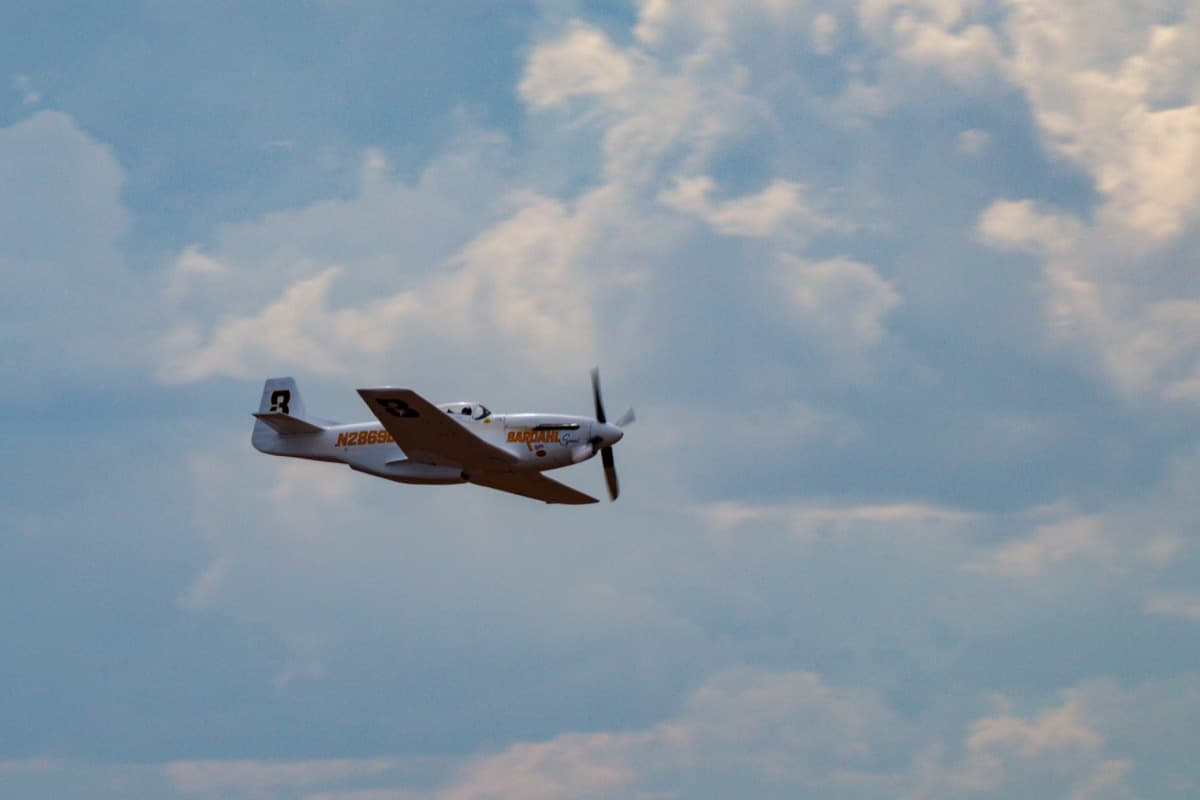
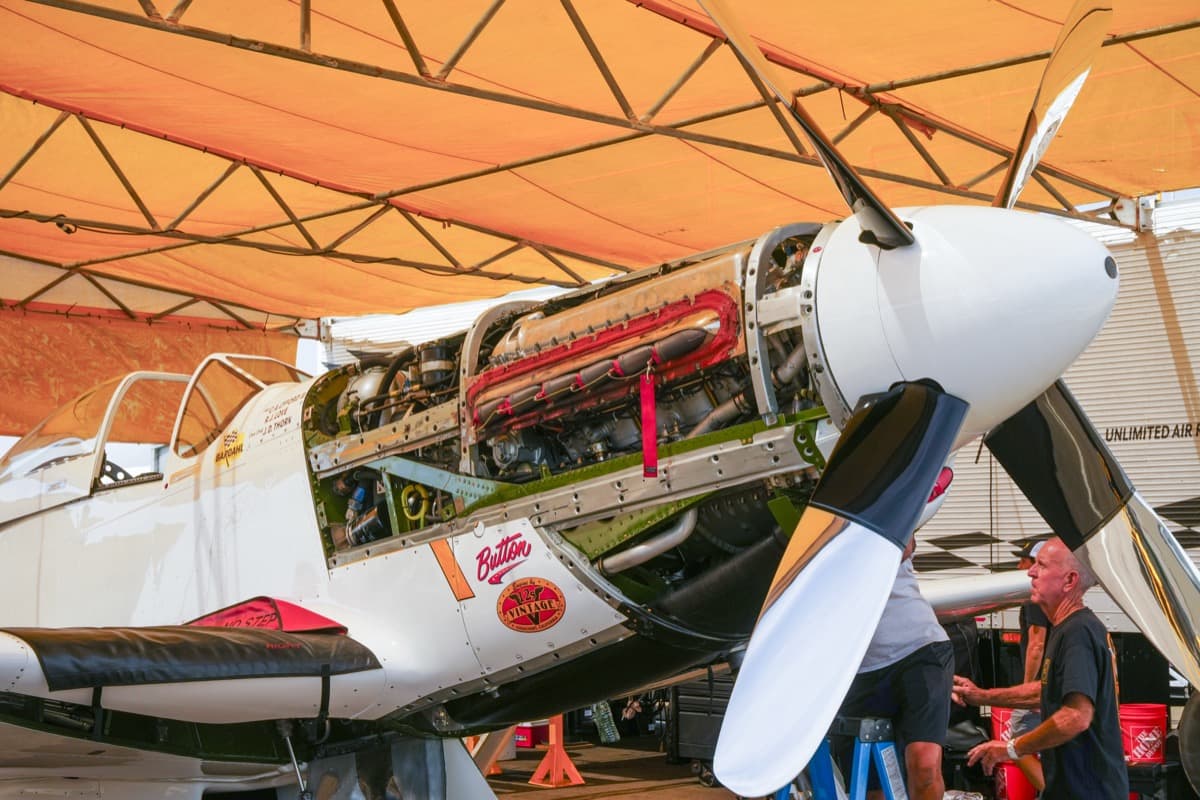
Steve Hinton piloted the Unlimited Gold class winner P-51 “Bardahl Special,” while his father, also Steve Hinton, flew the chase plane for the Unlimited class. The P-51 achieved 497 mph!
A close up of the heart of the P-51d “Bardahl Special,” which qualified at an impressive 497 mph.

For the STOL Drag racers, racer Rod Hewitt solidified the win in “Angry Kitten,” his Rans S7 that features a modified snowmobile engine.

“The math says I can’t lose,” he explained. “It’s a handful to fly — very squirrely.”

STOL pilots were visibly fatigued after their event.
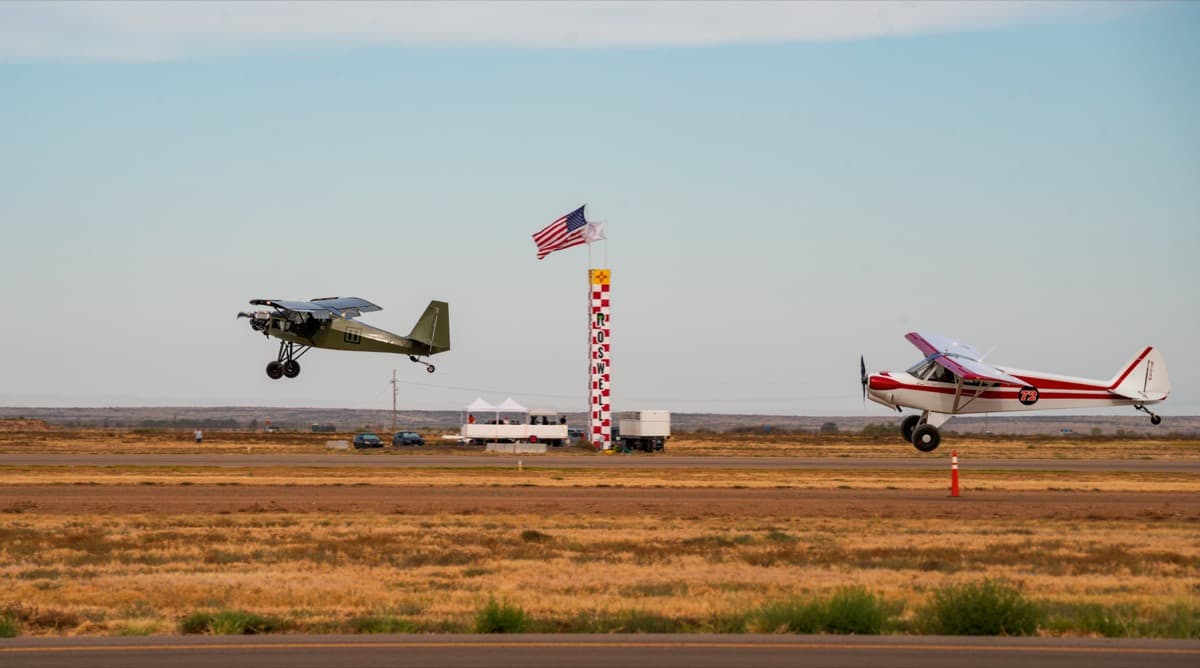
After the turnaround, David Kerley and “Grasshopper” increase the gap to Jed Ellithorpe and “Redline” during a STOL Drag race.
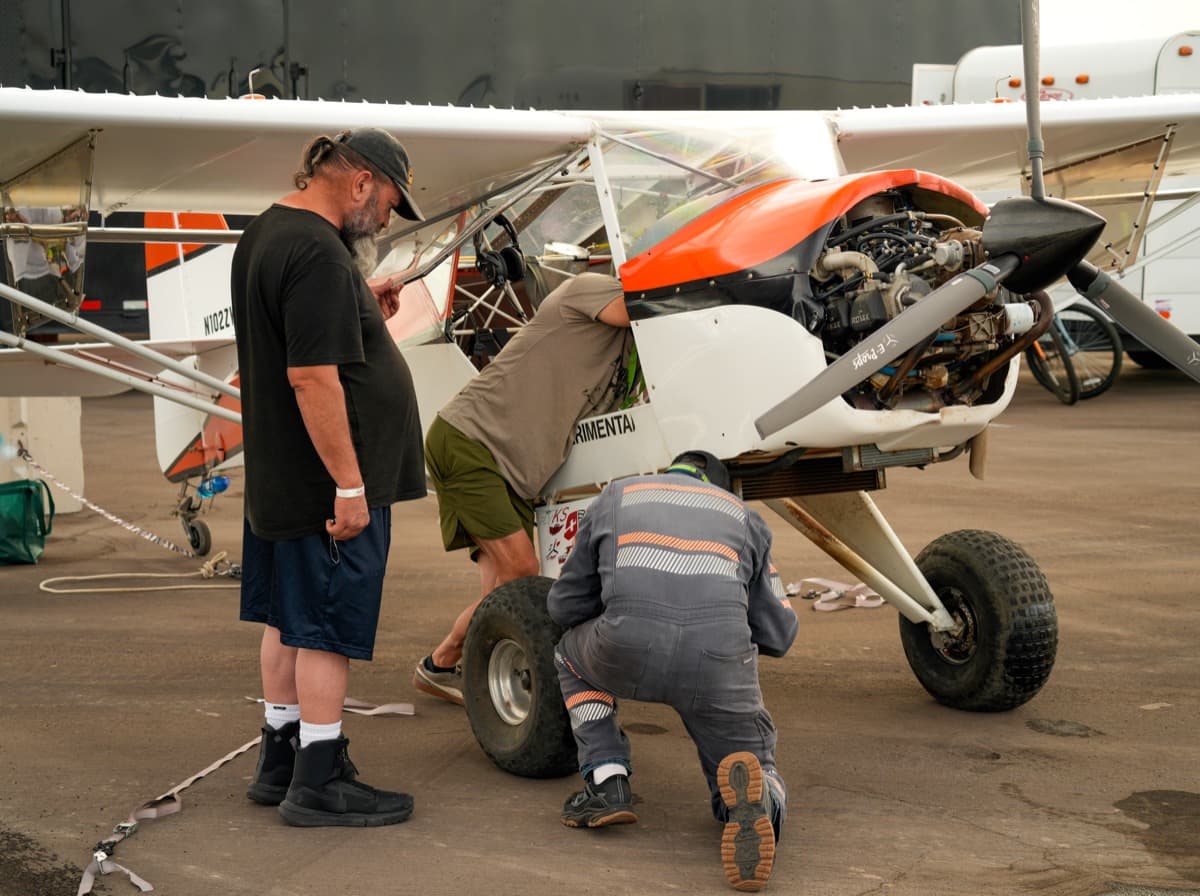
Some early-morning tuning up in the STOL pits before the first Drag heat of the day.

Complete information on the pilots, their aircraft, and race results is available at Reports.AirRace.org.

For more information: AirRace.org

Reader Interactions

Share this story

  • Share on Twitter Share on Twitter
  • Share on Facebook Share on Facebook
  • Share on LinkedIn Share on LinkedIn
  • Share on Reddit Share on Reddit
  • Share via Email Share via Email

Become a better informed pilot.

Join 110,000 readers each month and get the latest news and entertainment from the world of general aviation direct to your inbox, daily.

This field is for validation purposes and should be left unchanged.

Curious to know what fellow pilots think on random stories on the General Aviation News website? Click on our Recent Comments page to find out. Read our Comment Policy here.

Leave a Reply Cancel reply

Your email address will not be published. Required fields are marked *

This site uses Akismet to reduce spam. Learn how your comment data is processed.

Primary Sidebar

Read the Latest Issue

Cover of the September 17, 2026 edition of General Aviation News
September 17, 2026

Become A Better Informed Pilot.

Join 110,000 readers each month and get the latest news and entertainment from the world of general aviation direct to your inbox, daily.

This field is for validation purposes and should be left unchanged.

Recent Comments

  • jimh in ca on New App Helps Pilots Master the Language of Aviation
  • Jamie Beckett on New App Helps Pilots Master the Language of Aviation
  • Jamie Beckett on The Big Wrap Up
  • Ben Sclair on Dreams Take Flight
  • Ben Sclair on New App Helps Pilots Master the Language of Aviation
  • Javier Lifa on New App Helps Pilots Master the Language of Aviation
  • LuckyLindy on Dreams Take Flight
  • David W Sandidge on Fuel Starvation Ends Student’s Cross-Country in Tampa Bay
  • Randy coller on New App Helps Pilots Master the Language of Aviation
  • rwyerosk on Fuel Starvation Ends Student’s Cross-Country in Tampa Bay

© 2026 Flyer Media, Inc. All rights reserved. Privacy Policy.

  • About
  • Advertise
  • Comment Policy
  • Submit Press Release
  • Contact Us
  • Privacy Policy
  • Writer’s Guidelines
  • Photographer’s Guidelines