

At the conclusion of a short cross-country flight, the flight instructor and student pilot elected to perform takeoffs and landings at the airport in South Charleston, West Virginia.
The privately owned airport has a single asphalt runway 1,900 feet long by 24 feet wide, with no taxiway.
The flight instructor told investigators that he scanned the runway for obstructions and announced over the airport’s Common Traffic Advisory Frequency the airplane’s position in the traffic pattern and their intent to land. No obstructions were observed during the landing.
As the pilots taxied the Aero AT Sp.z o.o Light-Sport Aircraft down the recently paved runway, a person wearing dark-colored clothing “suddenly” came into view, they told investigators.
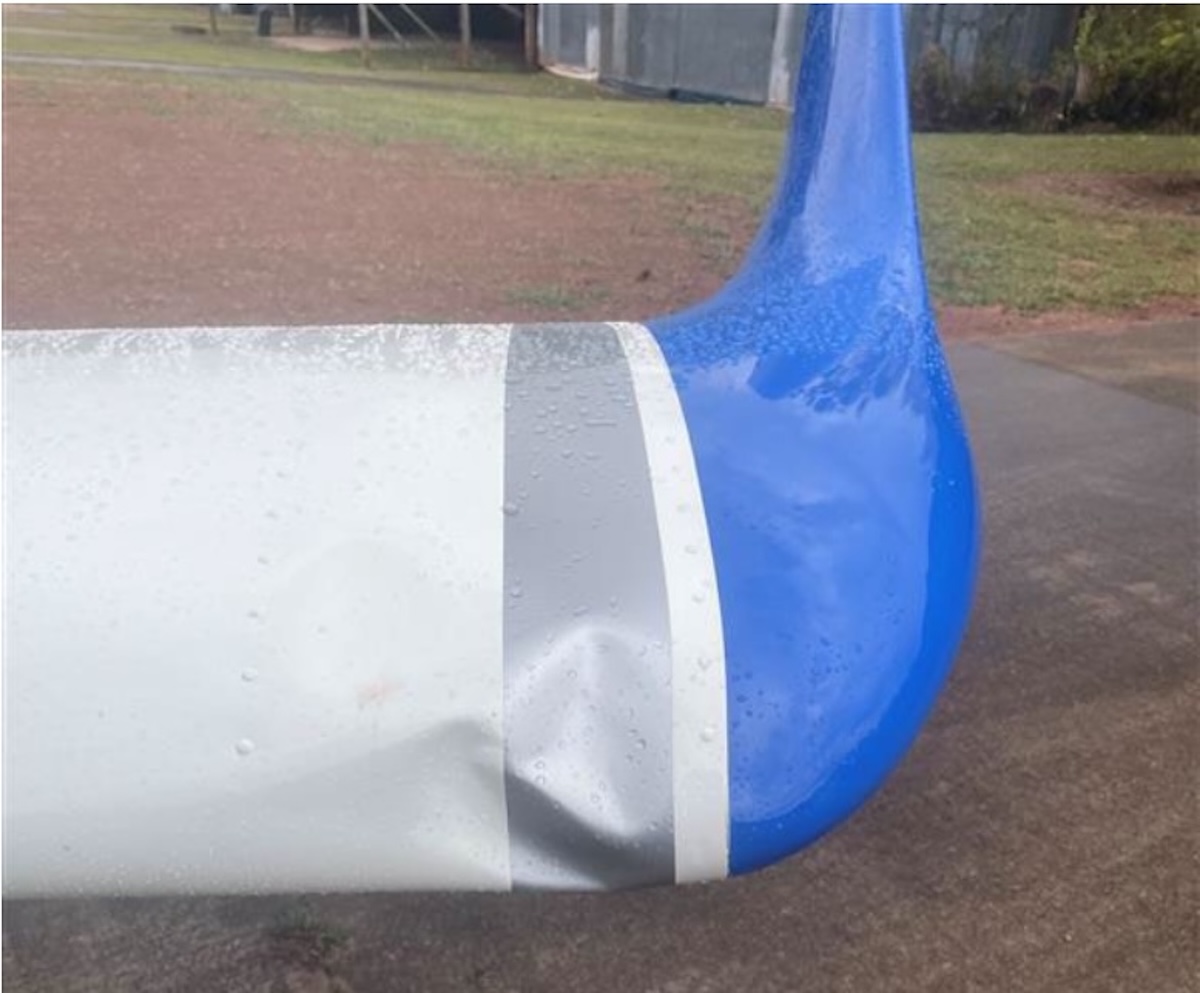
The person was walking along the runway with his back toward the approaching airplane. The airplane’s left wingtip hit the pedestrian and knocked him forcefully to the ground, resulting in serious injuries. The airplane’s wingtip incurred minor damage.
The flight instructor stopped the airplane and he and the student rendered aid to the pedestrian until emergency responders arrived.
The flight instructor reported that the pedestrian typically carried a hand-held radio that he would use to listen for traffic calls, but he was not carrying it with him on the day of the accident.
Probable Cause: The pedestrian’s inadequate visual lookout while walking next to an active runway, which resulted in the airplane striking him during taxi.
To download the final report. Click here. This will trigger a PDF download to your device.
This October 2024 accident report is provided by the National Transportation Safety Board. Published as an educational tool, it is intended to help pilots learn from the misfortunes of others.
Leave a Reply