

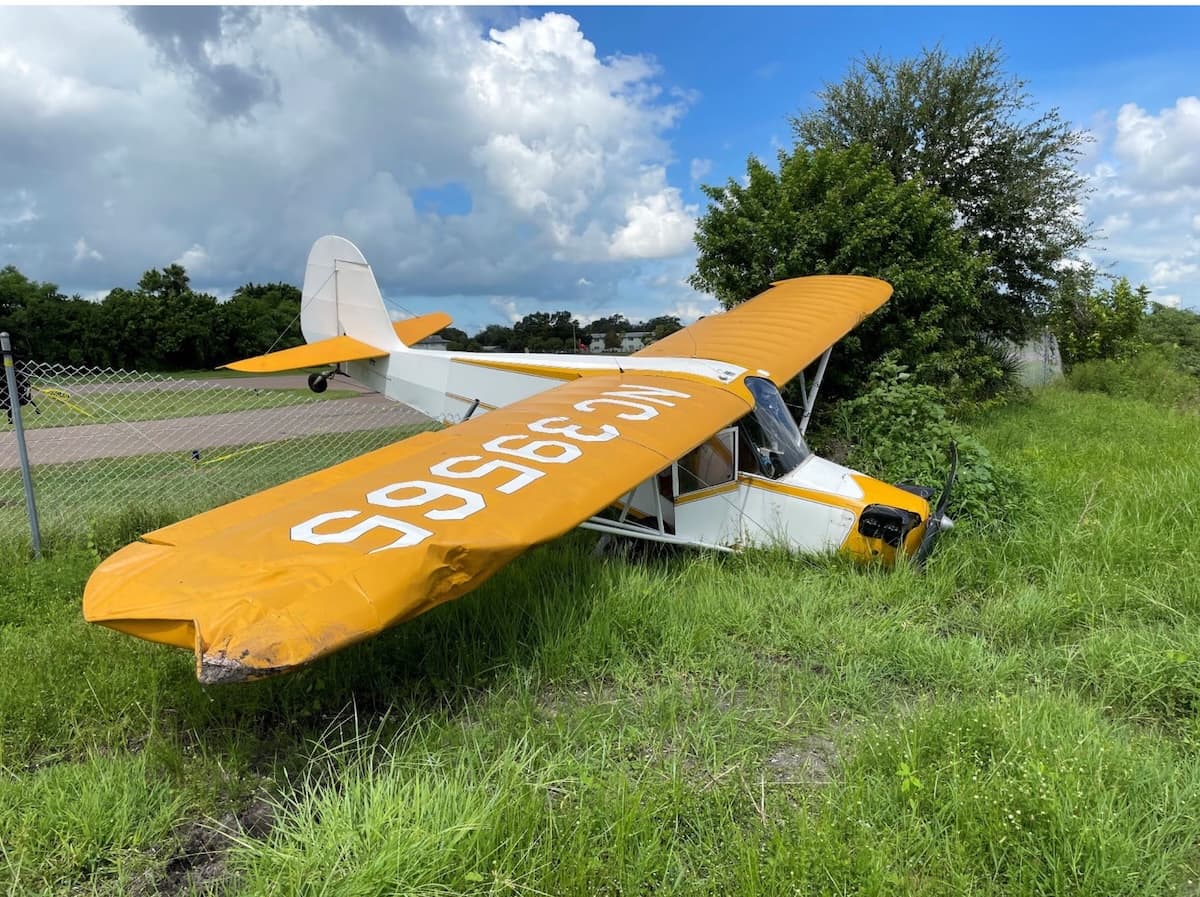
The pilot reported that after completing a pre-takeoff check of the tailwheel-equipped Aeronca 65-TAC, he taxied onto the runway at the airport in Clearwater, Florida, for takeoff.
Upon entering the runway and aligning the airplane to the centerline, he increased the engine power to full for takeoff. Shortly after the airplane began to roll, it started to veer to the left. He applied right rudder, but the plane continued to veer to the left. It then departed the left side of the runway onto the adjacent grass and struck an airport perimeter fence, resulting in substantial damage to both wings. The pilot sustained minor injuries in the crash.
The pilot reported that there were no preimpact mechanical malfunctions or failures with the airplane’s flight controls that would have precluded normal operation. Additionally, following the accident, an FAA inspector examined the airplane and found no evidence of any anomalies with the airplane’s aerodynamic flight controls and trim.
However, the inspector also found that a wooden knob that had been attached to the forward seat’s throttle control was lying on the floor of the airplane, but not obstructing the movement of any of the flight controls. The pilot stated that the knob, which did not appear to be an original component to the airplane, had come off just before the airplane departed the runway surface. He told investigators that this precluded him from reducing engine power and stopping the airplane before it struck the fence.
Probable Cause: The pilot’s failure to maintain directional control during the takeoff roll. Contributing to the outcome, was the pilot’s inability to control the engine following the loss of directional control due to the separation of a knob from the engine’s throttle control.
To download the final report. Click here. This will trigger a PDF download to your device.
This August 2024 accident report is provided by the National Transportation Safety Board. Published as an educational tool, it is intended to help pilots learn from the misfortunes of others.
RED Flags:
– 58-year-old Private Pilot.
– 259 hours; Total, all aircraft, although he does have an IR…
– 120 hours PIC.
– One hour in last 90 days.
– Last FR was in a C-150.
– “0” hours; Total, this make and model.
Needing 139 hours of dual instruction(?)…in airplanes …to earn a private pilot certificate and an instrument rating …is a lot.
This was his first flight in the airplane. There’s no mention of a Tailwheel Endorsement. What are the chances he was attempting to teach himself?
A little puzzled. The knob was attached to a metal lever. If it became detached why not just pull the lever back?
Instructors need to do a better job of explaining torque and P factor. It’s sad how few pilots can tract the center line. Right foot for American engines and left foot for Russian engines on takeoff and climb.
Left for the Brits, too.