

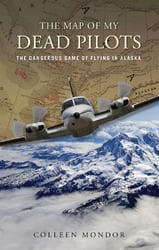
There are some books about aviation that are so spot-on, so gritty, that you are compelled to hide them from the aviation squeamish. “The Map of My Dead Pilots: The Dangerous Game of Flying in Alaska” is one of these books. The book was written by Colleen Mondor, who drew upon her four years of running dispatch operations for a Fairbanks-based airline. The names have been changed, but the experiences, such as knowingly flying over-loaded aircraft and intentional scud-running, are pulled from real life.
The pilots often fly less-than-in-the-best-of-shape equipment and haul everything from sled dogs and high school sports teams to the recently dearly-departed and groceries.
 Most of the pilots take the jobs in Alaska as a way to gain experience for other flying jobs. Sometimes they do, but sometimes they pay the ultimate price.
When I read the part about the false promises made to low-time pilots about earning decent money, getting experience, and having a good schedule, I had to laugh, having heard the same horror stories so many times before from pilots who took jobs in the Lower 48 only to find themselves worked nearly to death by unscrupulous business owners.
Some of stories in the book leave the reader with the impression that substance abuse and poor decision-making are core values in aviation. The scary part is that when you read the stories, you will swear you know a pilot who is just like the one being written about.
If you are planning a trip to Alaska that includes flying into remote areas, don’t read this book. You’ll end up taking the bus. But, if you are looking for a gritty, I-can’t-believe-they-did-that, blatant example of anti-authority, invulnerability and macho hazardous attitudes, you’ll probably like this book. If you want to discourage someone from a career in aviation have them read this book. Really.
The Map of My Dead Pilots, the Dangerous Game of Flying in Alaska runs 256 pages and is available from Lyons Press.
People who read this article also read articles on airparks, airshow, airshows, avgas, aviation fuel, aviation news, aircraft owner, avionics, buy a plane, FAA, fly-in, flying, general aviation, learn to fly, pilots, Light-Sport Aircraft, LSA, and Sport Pilot.
Well just reading the reviews, I am going to pass, I spent a good many years flying in Alaska. I worked for some that were well less that how should I say it, in the best of financial shape and others that could not do enough for you. As for flying under the influence, all the people I ever worked with or for, that would be the quickest way out of a job. My guess this is more of a novel than anything else. For the most part the work it hard and there is long hours. As for the pay well its aviation, Draw your own conclusions. Since I come from a part of the country with high cost of living, when I first got to Alaska, the sticker shock was not so bad, in many ways the cost of living was less that what I was use to. For over 20+ years now pilots flying 135 have been tested for drugs before hire and random afterwards, and alcohol too. You tell the employer that you refuse to take a random, no problem, you are going to get fired, I taking to many drug tests over the years to no better. I sure as heck am not going to spend money on this. Meg you should know better too.
George:
I promise, there is not a lot of talk of flying under the influence in MAP. I imagine Meg was referring to a few passages where I wrote about pilots still feeling the effects of their activities the night before (legal, but clearly quite ill). We certainly do have random drug/alcohol testing in AK just as everywhere else and I never knew a pilot who refused a test. MAP is certainly not about flying drunk and I’m sorry if you thought otherwise.
Sincerely,
Colleen Mondor
The book is dead on. While reading it in early winter we had two air taxi crashes in Alaska. One was pushing really bad weather and ended in death of the pilot going to pickup passengers who said they couldn’t see anything that night. The second was an over loaded (for conditions) splash just off the poor runway into the ocean. The good part was they didn’t get very far off shore and the pilot and two passengers were able to make it to shore okay.
The comment by the reviewer that one might take a bus instead of flying in Alaska after reading the book isn’t an option. Alaska has few roads and thus no option from ground transport between nearly all the remote villages.Â
I enjoy flying in Alaska, but only do it for pleasure and time my trips during good weather or when conditions are improving. I never depart with declining weather conditions. Even then the weather gods often offer up surprises that were not in the weather forecast.
“…false promises made to low-time pilots about earning decent money, getting experience…” is General Aviation’s normal method of operation for duping unsuspecting inexperienced young pilots into working cheap. I’ve been flying since 1964, and know much, much better. A couple of years ago I was offered a spray job that was to pay $39,000 for 4 months of Ag Flying. The only thing I wasn’t offered were the winning numbers for the MegaBucks mult-million dollar lottery. From past experience I know that such pay would never happen, and the employer would have good excuses of not making good on the offer. However, without a doubt, new young inexperienced pilots will continue to prostitute themselves by workiing cheap to build flight time, and the flying services will continue to exploit them.. The older pilots reading this know exactly what I’m talking about. Â